

England vs Great Britain vs the United Kingdom: What’s the Difference?
A very necessary guide for Americans
England. Great Britain. The United Kingdom. Britain. The UK.
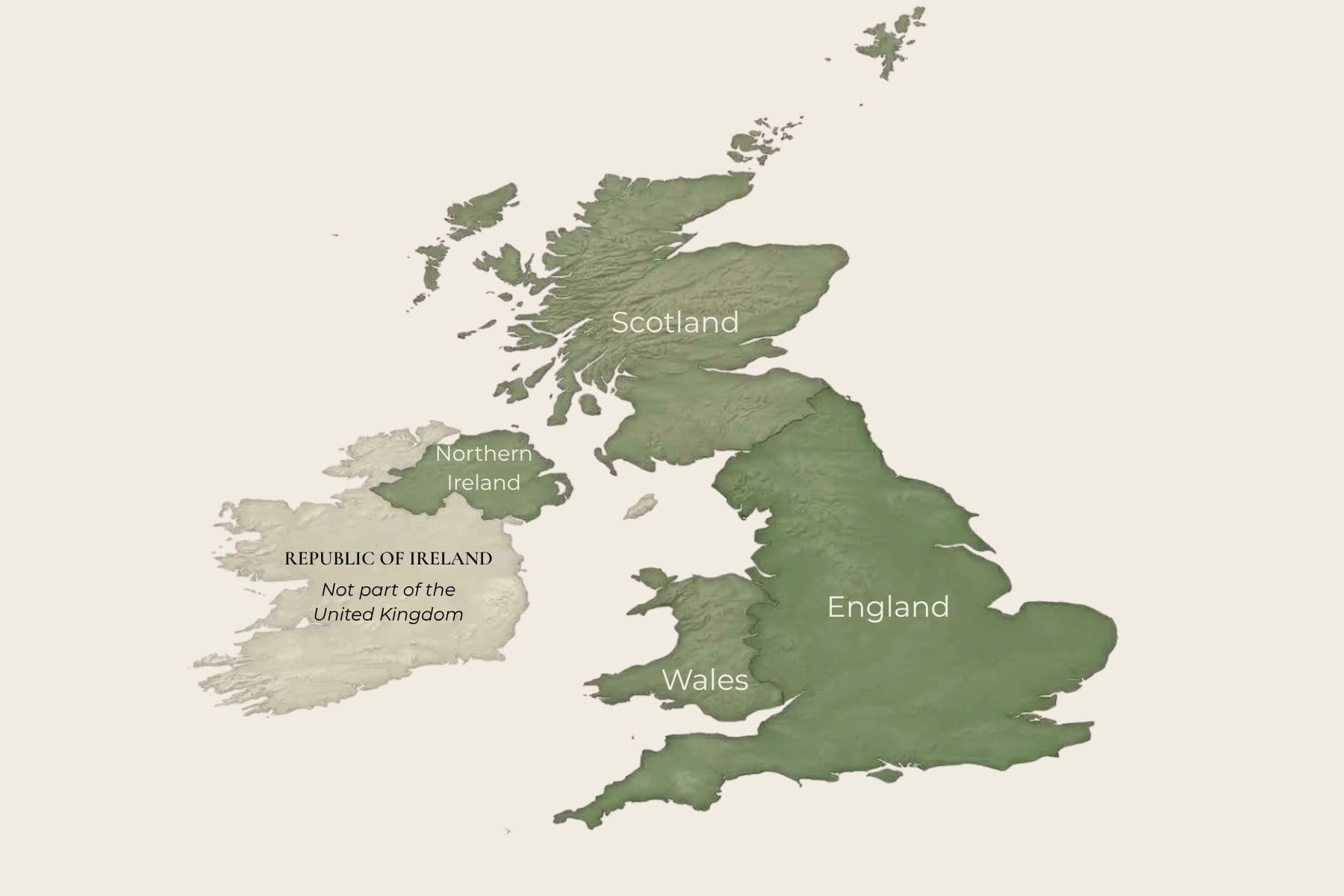
Most Americans know these words are related. I’m less convinced all of us could confidently explain England vs Great Britain vs the United Kingdom if handed a blank map and asked to prove it.
Fair enough. They overlap, people use some of them casually, and “Britain” or “the UK” gets thrown around in ways that make the whole thing very confusing.
Fortunately, the actual geography is much easier than the vocabulary makes it sound.
Once you see it on a map, it makes sense.
First, what is England?
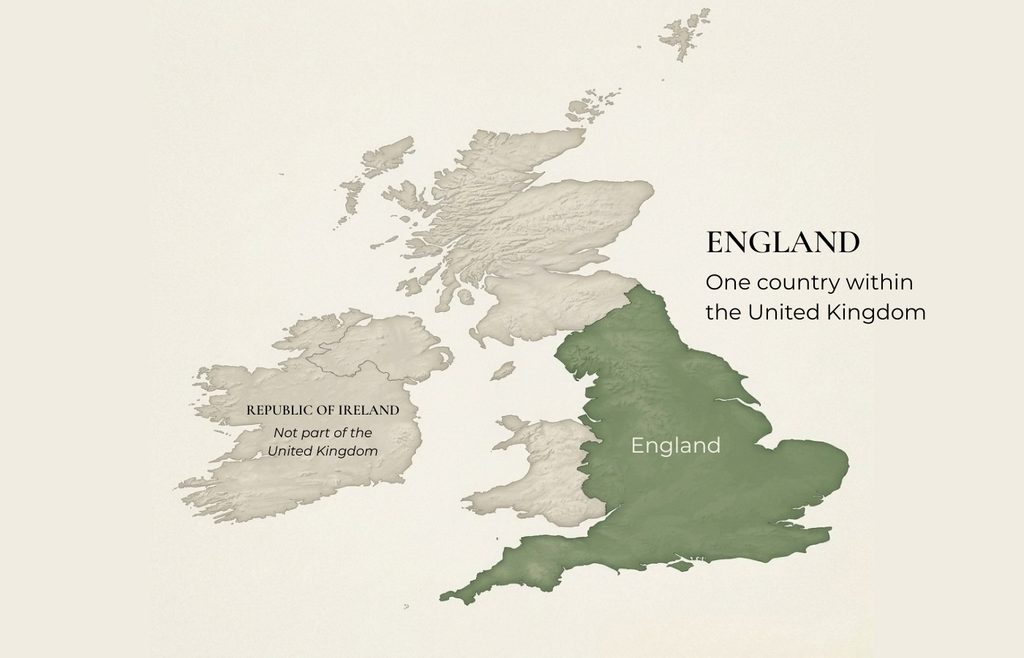
England is England. One country within the United Kingdom.
It occupies most of the southern part of the island of Great Britain. (Yes, Great Britain is an island. You’d be shocked at how many people don’t realize this. If that’s you too, now you know. I won’t tell.)
London is in England. So are places you’ve heard of like the Cotswolds, Cornwall, Yorkshire and the Lake District.
But England is not the United Kingdom.
England is part of the United Kingdom.
Stick with me. We’re diving in.
So, what is Great Britain?
Here’s where it helps to look at the map.
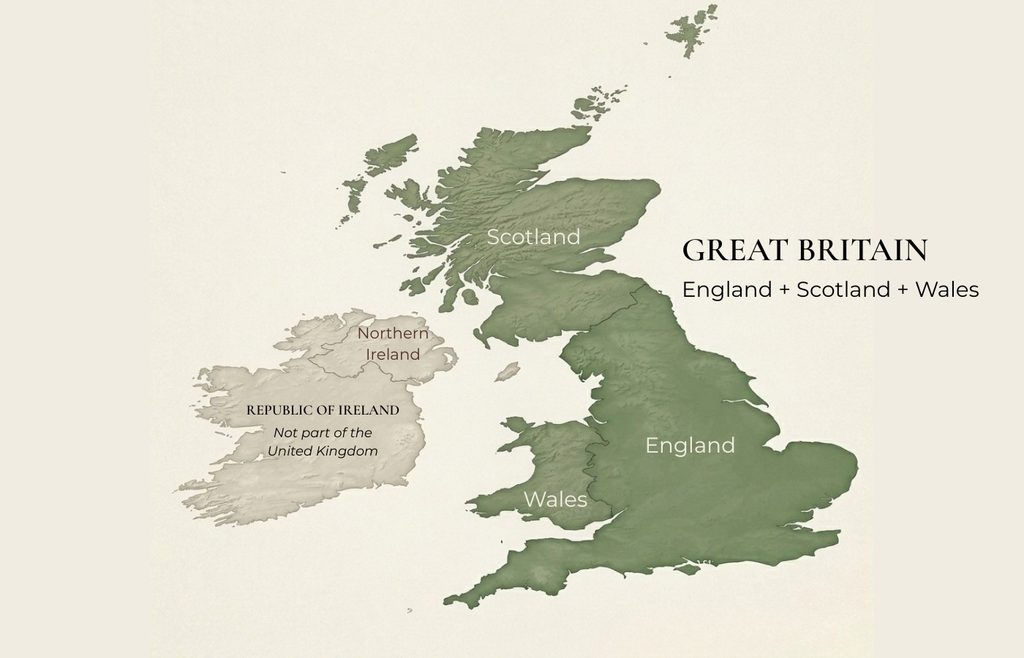
Great Britain is the easy one to picture: England, Scotland and Wales together.
On the map, it’s essentially the big island sitting there neatly contained by water.
Easy. Makes sense.
Understanding this distinction makes the next bit much easier.
It’s very important to remember:
A person from Scotland is not English. Neither is someone from Wales. And you may get a black eye for forgetting it.
Those people are Scottish and Welsh, respectively. Their countries are part of the United Kingdom.
Just like England is part of the United Kingdom, but its citizens are English.
So what is the United Kingdom?
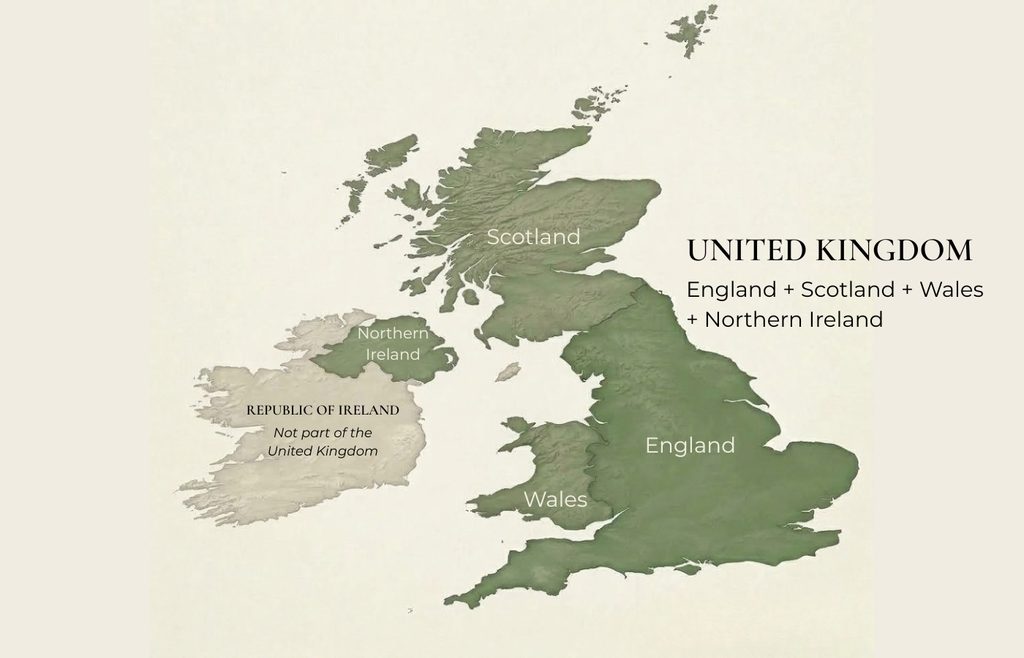
Great Britain becomes the United Kingdom when you expand the kingdom to include Northern Ireland. (This is how my Disney brain remembers it, anyway)
Actually, the full name rather helpfully explains itself: The United Kingdom of Great Britain and Northern Ireland.
But we all just call it the United Kingdom because that’s a mouthful.
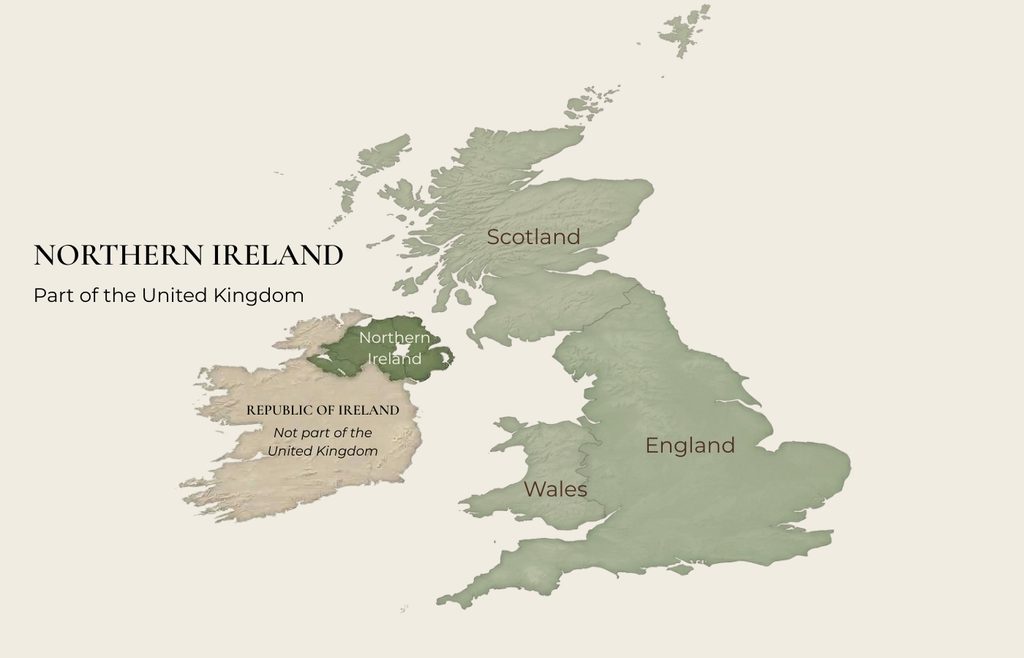
For clarity, the Republic of Ireland is not part of the UK. It is a separate sovereign country.
In other words: England + Scotland + Wales + Northern Ireland = the United Kingdom.
Then what does just “Britain” mean?
Ok, I really hate this part. Buckle up. Read this twice.
“Britain” and “British” are often used as shorthand for the United Kingdom as a whole, not only to refer to Great Britain.
I know.
The UK government itself notes that “British” is commonly used to describe the United Kingdom. GOV.UK. (I told you, it doesn’t make sense)
A British passport, for example, is a UK passport. Scottish people hold British passports. Welsh people hold British passports.
But the most important thing to remember is that British and English are not synonyms.
Someone can be Scottish and British.
Someone can be Welsh and British.
Neither of those people is English.
Good lord, do not mess this up.
People in Northern Ireland may identify as British or Irish, as they choose, and identity there has its own history and sensitivities.
If you are talking about the UK generally, “British” is usually the word you want. Just don’t assume that tells you how any individual person identifies.
And definitely do not use “English” as a catch-all for everyone in the UK. Please do not.
And where does Ireland fit in?
This is the other bit worth getting right, though it’s fairly straightforward.
The island of Ireland contains Northern Ireland and the Republic of Ireland.
Northern Ireland is part of the United Kingdom.
The Republic of Ireland is an independent country and is not part of the UK.
So be aware that saying “Ireland is part of the UK” is incorrect.
Northern Ireland is.
The Republic of Ireland is not.
This distinction is tied to a long and painful political history, including the Troubles. We won’t go there right now, but it’s worth getting the terminology right.
Why does any of this matter when you travel?
Because these are not meaningless administrative labels.
England, Scotland, Wales and Northern Ireland have their own histories and identities.
Many of these identities, rivalries and borders were being fought over for centuries before the United States even existed.
Those histories still shape national identity, traditions and sensitivities today. It’s worth respecting that.
For the well versed, this may seem obvious, but it’s common enough for me to feel the need to state the following for my fellow Americans:
London is not shorthand for Britain. (Please. Please. Please.)
Edinburgh is not an English city.
Wales is not just western England.
Any questions?
What about the British Isles?
You may also come across the term British Isles, particularly on maps and in older writing.
Traditionally, it has been used as a geographic term for Great Britain, Ireland and surrounding islands.
There is a caveat.
The term has no official legal or intergovernmental status, and the Irish government does not use it. In Ireland, the word “British” being applied to the entire island group can understandably carry political implications that a purely geographic definition glosses over.
Just be specific to avoid doubt: If you mean Britain and Ireland, simply say Britain and Ireland.
Problem solved.
The easiest way to remember it
England is one country. It’s within the UK.
Great Britain is England + Scotland + Wales.
The United Kingdom is Great Britain + Northern Ireland.
The Republic of Ireland is a separate sovereign country. Same island as Northern Ireland. It’s not part of the UK. It’s a neighboring country.


