


And no, it is not a probiotic cookie
The first time I heard the phrase digestive biscuit, I assumed Britain had invented some sort of health cookie.
To be clear, I mean biscuit in the British sense. Cookie, to an American.
I imagined perhaps something vaguely probiotic. Medicinally adjacent. Maybe the sort of thing you’d eat a few of when your tummy was on the fritz.
It turns out, though, that my confusion was not entirely unreasonable. Digestive biscuits really were originally marketed with digestion in mind.
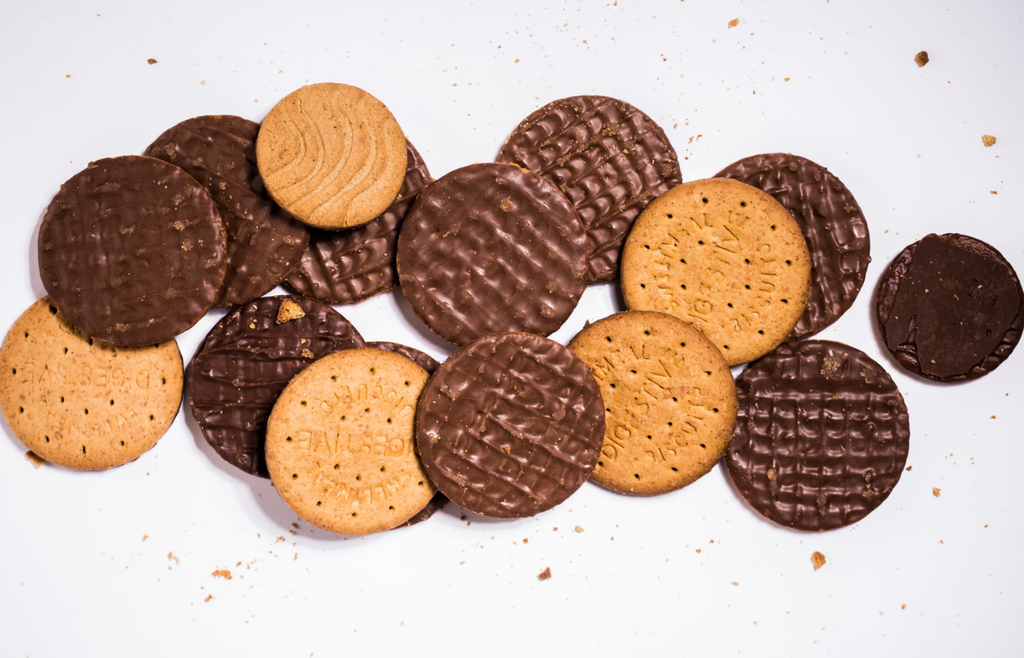
McVitie’s introduced its now-famous Digestive in 1892. The idea was that the baking soda used in the biscuit could help with digestion.
Victorians were particularly enthusiastic about foods with supposed digestive benefits, so the whole thing made more sense in the 1890s than it does standing in a supermarket aisle today. Baking soda is useful in baking. That does not mean your chocolate-covered biscuit is doing meaningful work for your gut.
Generally, one should not buy digestive biscuits because one believes they are going to fix one’s gut.
Buy them because they’re good.
So what actually makes a biscuit a digestive?
A digestive is a fairly plain, crumbly biscuit made with wholemeal flour and usually some form of raising agent such as baking soda.
They aren’t super sweet. That’s part of the appeal.
They have a slightly coarse texture and a wheaty, almost nutty flavor that makes them feel more substantial than a standard cookie. Some recipes also include oatmeal, which helps explain that oaty, coarse texture.
Americans may be tempted to compare them to graham crackers, and that’s probably the closest thing we have, but it isn’t quite right.
A digestive is usually thicker and more crumbly. It’s also less cinnamon-y, less sweet, and more wheaty.
A graham cracker wants to become a s’more.
A digestive wants something to be dunked into.
McVitie’s isn’t the only one
For years, I assumed “Digestive” was basically the name of a McVitie’s biscuit.
It isn’t.
Digestive is a type of biscuit, and plenty of companies make them. McVitie’s is just the brand that pops into most people’s heads when they think of digestives in the classic red packaging.
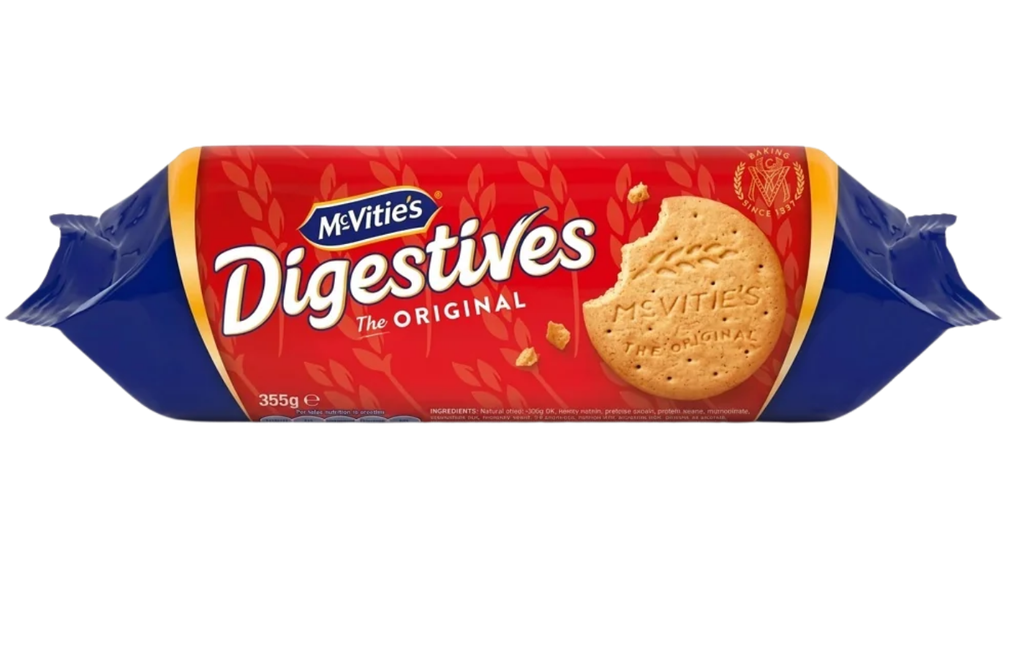
As far as I can remember, my own introduction to them probably came while I was doing an internship in college in London at a publishing house. Somewhere along the way, a digestive was put in front of me and I’ve been keen on them ever since.
I now buy them in the U.S. whenever I see them.
This is perhaps not the health outcome the Victorians had in mind.
Then someone put chocolate on them
This was an improvement.
McVitie’s introduced the chocolate digestive in 1925, coating one side of the biscuit in chocolate and thereby eliminating much of the remaining argument that this was a health food.
These are my preferred version.
Plain digestives are perfectly good. I’ll happily eat one, especially if it can be softened with a dunk in a cup of tea or coffee. But the chocolate-covered ones are much more exciting, and there are now all sorts of variations with milk chocolate, dark chocolate, caramel and other embellishments.
Apparently, there is also a correct way to eat the chocolate version.
According to McVitie’s factory staff, you should eat it chocolate-side down so the chocolate hits your tongue first and starts melting immediately.
Well alright then.
Are they actually British?
Yes, very.
Not because Britain is the only place that eats biscuits of this kind, but because the digestive has become one of those ordinary foods so embedded in British life that nobody there needs it explained.
It’s the sort of biscuit that turns up with tea, in office kitchens, in biscuit tins and anywhere someone thinks you might need a little something.
There is nothing glamorous about a digestive.
They’re hearty without being heavy, sweet without being sugary, and just interesting enough that you can accidentally eat several while telling yourself they are basically whole grains.
Again, they are not health food.
I feel this needs repeating.
In Conclusion
If someone offers you a digestive biscuit in Britain, they are not trying to improve your intestinal health.
They’re giving you a little treat.
Take it.
If there’s chocolate on the back, even better. You made a friend.


