The desire to spend time in Europe is easy to understand. Long meals. Unhurried days. A pace that feels different from ordinary life.
But Europe isn’t always possible. Flights are expensive, schedules don’t cooperate, or the calendar won’t bend. What many travelers don’t realize is that a handful of hotels that feel like Europe in the US and Canada capture something genuinely close to that feeling, not by pretending to be European, but by sharing the qualities that make Europe appealing in the first place: scale, setting, culinary seriousness, and an atmosphere that encourages slowing down.
These are five worth knowing about.
The English Country Cottage: Twin Farms, Vermont
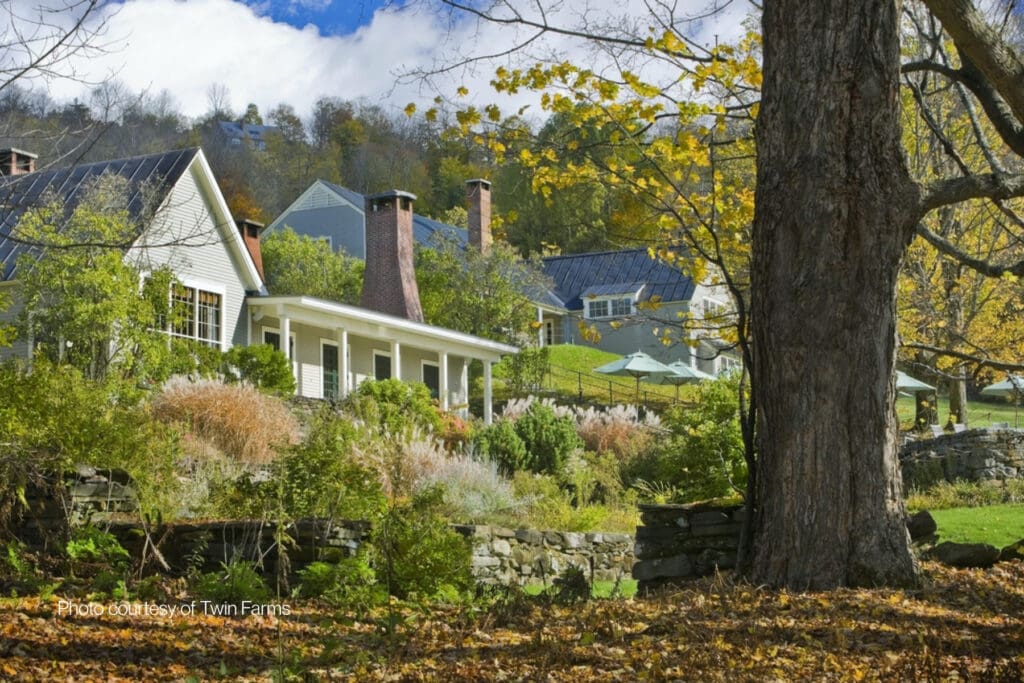
Twin Farms, a Relais & Chateaux property in Barnard, Vermont, sits on 300 acres of rolling woodland and meadow anchored by a circa 1795 farmhouse. It was purchased in 1928 by Nobel Prize-winning novelist Sinclair Lewis and his wife Dorothy Thompson, one of the most consequential journalists of the twentieth century, who made it their intellectual retreat for three decades. The guest list ran like a literary who’s who of the time, including H.L. Mencken, Bernard DeVoto, as well as a rotating cast from the political world of the era. The history alone is worth knowing.
(For the full story of the remarkable woman behind the genesis of Twin Farms, read my separate piece about Dorothy here.)
Today the property holds 28 individually designed accommodations, from rooms in the original Main House to freestanding cottages and treehouses set into the hillside. Every accommodation has a fireplace. The experience is fully all-inclusive: farm-to-table meals, wine pairings from a 15,000-bottle cellar, skiing on a private mountain, fly-fishing, hiking, all folded into the rate. The art collection includes works by David Hockney, Jasper Johns, and Cy Twombly throughout the property.
The combination of historic architecture, open landscape, long dinners, and near-total seclusion produces the same quality of rest that draws travelers to the English countryside. Twin Farms is adults-only for most of the year, located about 90 minutes from Burlington and three hours from Boston.
Rates vary seasonally. From approximately $2,800 per night, double occupancy, all-inclusive.
The Peace of Provence: Meadowood Napa Valley, California
What travelers are often drawn to in Provence isn’t the landscape alone. It’s the rhythm. Days are built around meals and markets. Wine is treated as part of daily life rather than a special occasion. There is an unhurried approach to everything that makes an ordinary afternoon feel worth savoring.
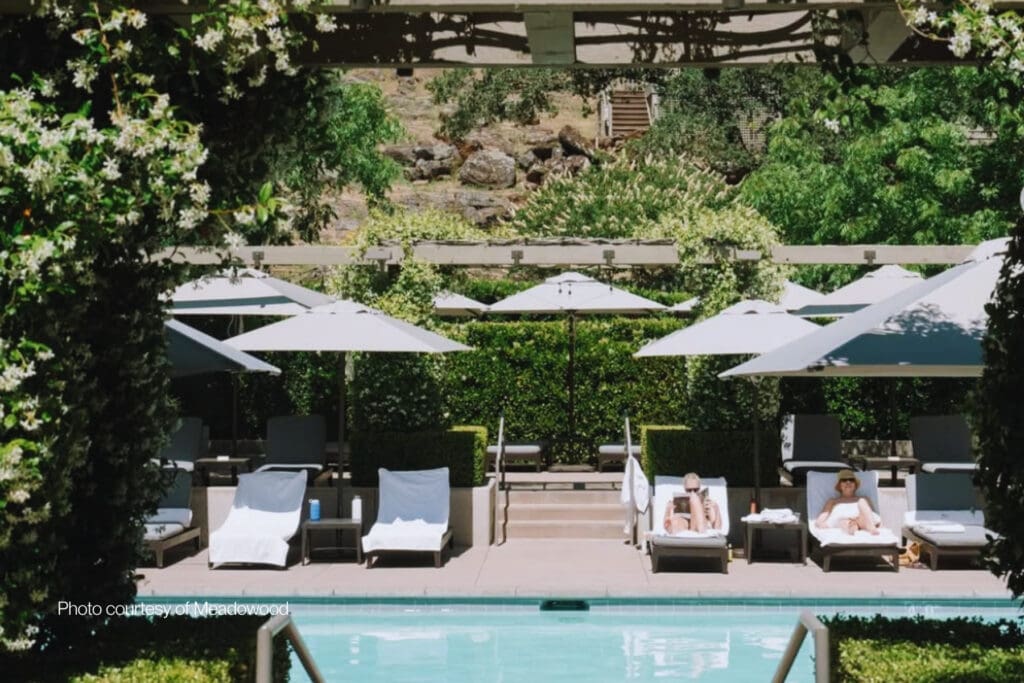
Meadowood Napa Valley captures that sensibility more convincingly than perhaps any other property in the United States. Set on 250 private acres in St. Helena, the property has been at the center of Napa Valley’s cultural life since H. William Harlan acquired it in 1979 and shaped it into a gathering place for the region’s winemaking community. The Wine Center, exclusive to hotel guests and members, offers structured tastings, educational programs, and curated winery visits led by published experts in viticulture. Meals are built around local and seasonal ingredients in the tradition of wine country cooking at its most considered.
It is worth knowing that Meadowood’s three-Michelin-starred Restaurant, one of only two such restaurants in Napa Valley at its peak, was destroyed in the Glass Fire of September 2020. The main building burned to rubble. It has not been rebuilt. For anyone who knew the restaurant, it remains a genuine loss for American dining. The property itself reopened in 2021, and Forum, the property’s main restaurant, continues to serve food built around the property’s gardens and the valley’s harvest. The 36 cottages and suites, each nestled into the forested hillside with a fireplace and private terrace, were restored and are very much intact.
For travelers who think of a French wine region stay as their ideal, Meadowood delivers the essential version of that experience. The pace here remains, as it should, unhurried.
Rates vary seasonally. From approximately $940 per night, double occupancy.
Bavarian Charm in the Rockies: Sonnenalp, Vail, Colorado
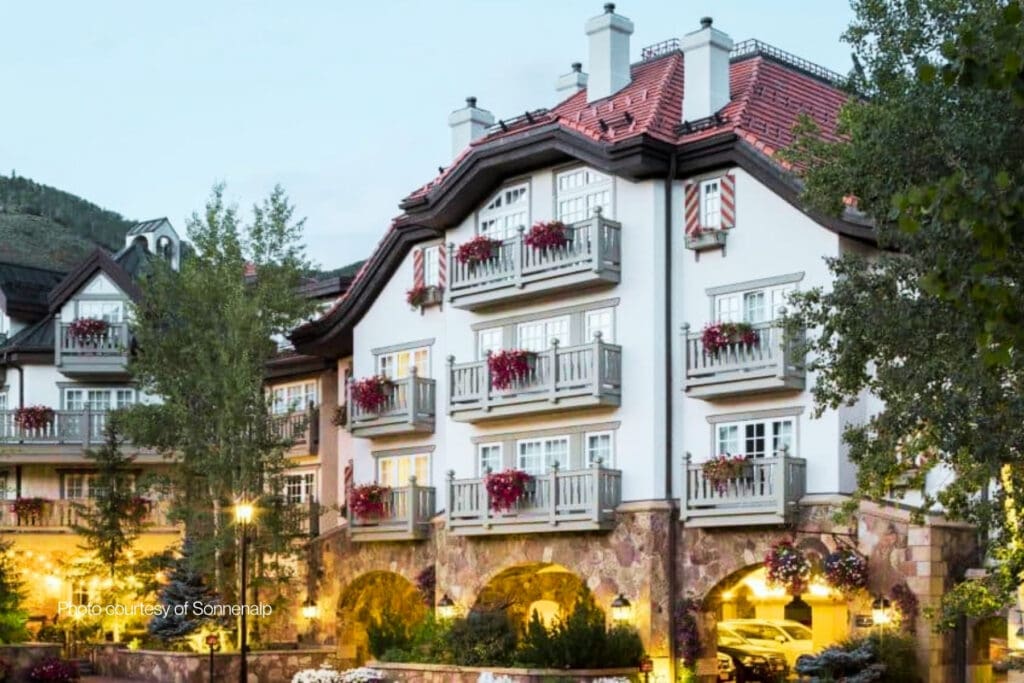
Vail was designed from the beginning to feel like an Alpine village. When Pete Seibert and Earl Eaton founded the resort in 1962, they modeled its architecture explicitly on century-old Bavarian villages. It can, in less careful hands, feel contrived.
The Sonnenalp is where the concept becomes entirely convincing.
The hotel has been owned by the Faessler family since 1979, when Karlheinz and Gretl Faessler, the family’s third generation, came to Vail and purchased a small motel, renovating it into Hotel Sonnenalp. The family’s roots trace to 1919, when Adolf and Eleonore Faessler opened the original Sonnenalp in Ofterschwang, Bavaria, beginning with eight cows and a handful of rooms. Five generations of continuous family ownership is felt in every aspect of the property in a way that no amount of design intent can replicate.
The 127 rooms and suites are furnished with handmade Bavarian furniture, wood-beamed ceilings, and gas fireplaces. Bathrooms have heated marble floors and deep soaking tubs. Dining includes Ludwig’s and the Swiss Chalet, which serves fondue, raclette, and Alpine specialties in a room that could plausibly have been transported from Gstaad. The Michelin Guide, which awarded the property a Key designation, described it as “almost more European than its counterparts in the Alps.” The Sonnenalp sits steps from the gondola in the heart of Vail Village.
Rates vary seasonally. From approximately $350 per night, double occupancy, in summer; $600 and up during ski season.
The Riviera on the Atlantic: Delano Miami Beach, Florida
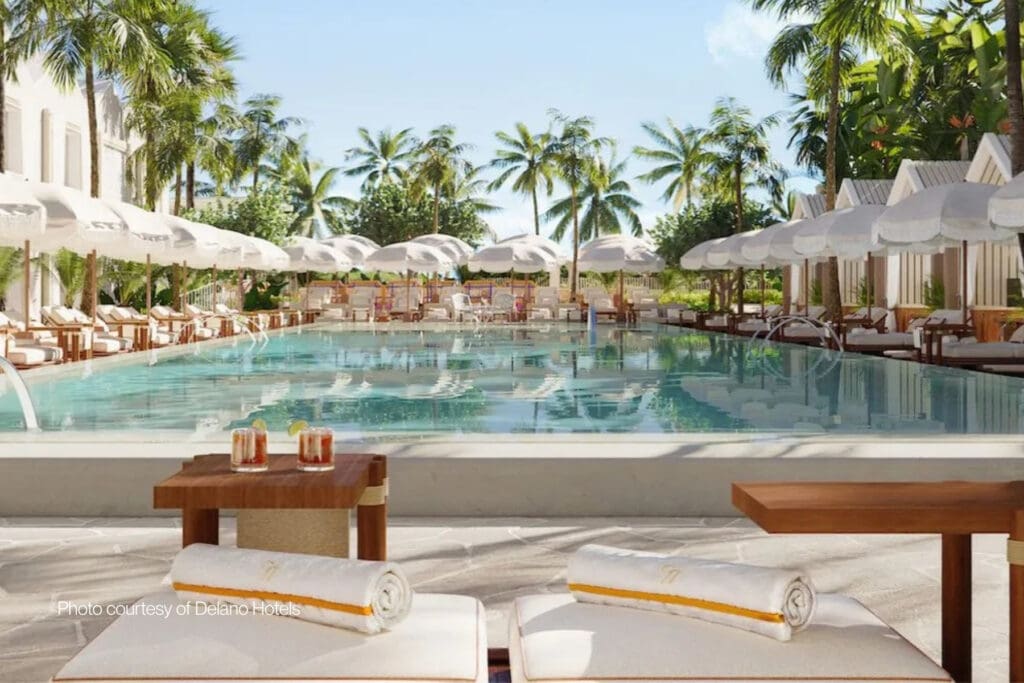
The French and Italian Rivieras have a particular character: white linen, a serious relationship with the pool and beach as social spaces, and architecture that is both glamorous and relaxed simultaneously.
The Delano Miami Beach, which reopened May 1, 2026 following a six-year renovation, is a genuine contender for that sensibility on the Atlantic coast. Originally built in 1947 and reimagined in the 1990s by Ian Schrager and Philippe Starck, the property has been fully renovated by Elastic Architects in collaboration with Ennismore. The result preserves the iconic Art Deco facade and the famous pool while shifting the interior mood toward something warmer.
The 171 rooms include poolside bungalow suites and penthouse suites. Four restaurant and bar concepts include a recreation of the legendary Rose Bar. The pool, framed by palms and positioned between the hotel and the beach, remains the social center of the property and the most direct visual reference to the Riviera beach clubs that earned this comparison.
For travelers whose European reference point is the Mediterranean coast, the newly reopened Delano is worth a close look, particularly while the property is still in its opening season.
Rates vary seasonally. From approximately $570 per night, double occupancy, in summer; $875 and up during peak season.
The Norwegian Fjords: Nimmo Bay, British Columbia
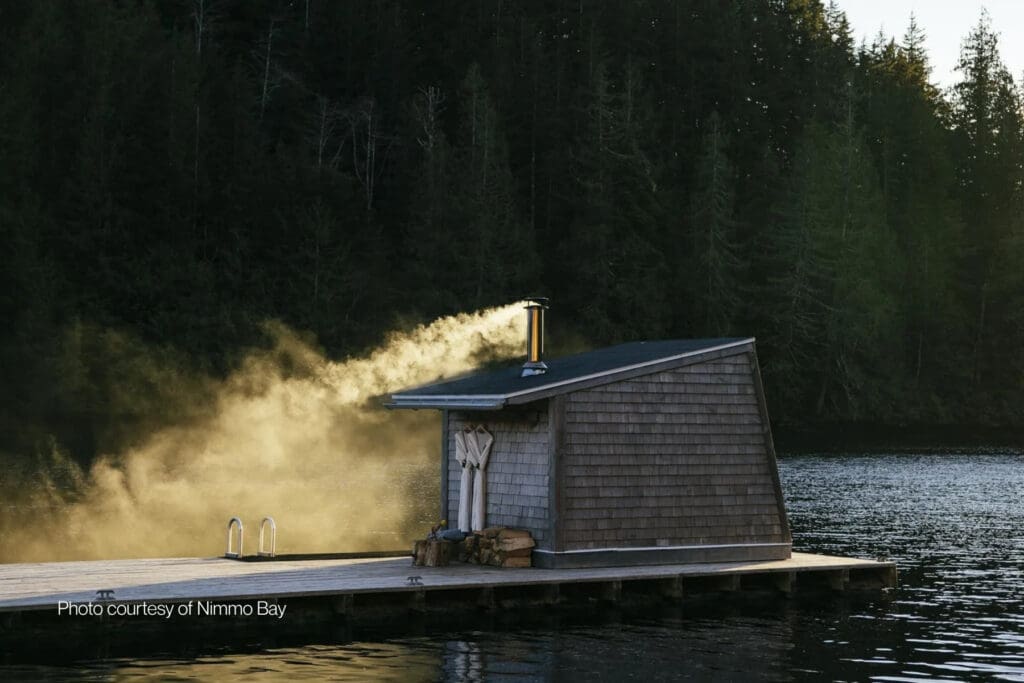
The appeal of Norway’s fjords is not entirely about scenery (though the scenery is extraordinary). It is about the specific feeling of wilderness at awe-inspiring scale: granite mountains that fall into dark water, the absence of roads, the sense of being somewhere that has not been organized for human convenience.
Nimmo Bay delivers that feeling more precisely than almost anywhere else in North America.
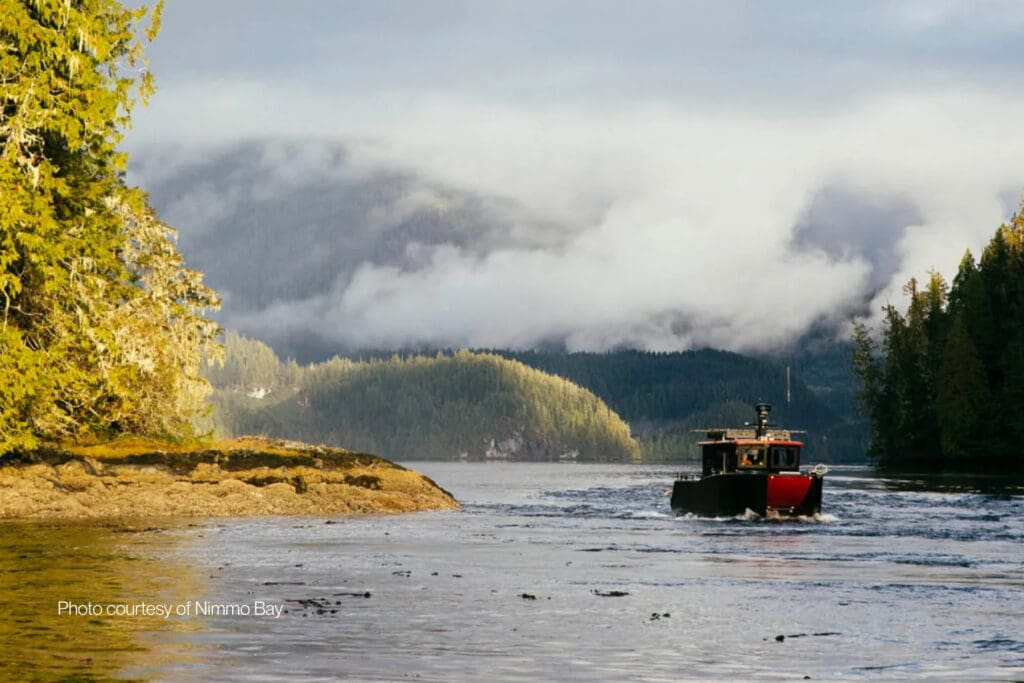
The resort sits on Mackenzie Sound in the Great Bear Rainforest, accessible only by floatplane or helicopter. There are no roads in. Craig and Deborah Murray arrived in 1980 with their young family, mooring a float house in the bay with no electricity and harnessing a natural waterfall as their power source. Their first guests arrived in June 1981. Their son Fraser now runs it. Nine two-bedroom cabins, six positioned on the waterfront over the tidal flats and three tucked into the forest beside a cascading stream, make up the entire property. At high tide the water moves beneath the waterfront cabins. At night the sound is the tide and the wilderness.
The base package includes accommodation, all meals built around locally caught seafood and foraged ingredients from the surrounding rainforest, house wine and spirits, and a core range of guided activities including kayaking, hiking, snorkeling, stand-up paddle boarding, and use of the floating cedar saunas. Helicopter excursions over 50,000 square miles of wilderness and premium spa treatments are available as add-ons. Grizzly bears, humpback whales, orcas, and bald eagles are routine sightings rather than special events.
Nimmo Bay is open May through October. American travelers require a valid passport. For travelers whose instinct when they say “Europe” means specifically the drama of Norway or Iceland, this is the most honest answer available without crossing an ocean.
Rates vary seasonally. From approximately $2,800 CAD per person, per night, based on double occupancy, including accommodation, meals, beverages, and core guided activities. Premium excursions and transfers additional.
Hotels That Feel Like Europe in the US and Canada: The Underlying Logic
What connects these properties is not just visual resemblance to European destinations so much as a shared set of qualities: food and wine taken seriously, unhurried pacing, and environments designed to hold your attention. Those qualities are what most travelers are actually seeking when they describe wanting to go to Europe. They are rarer than they should be in North American hospitality, which makes the properties that genuinely offer them worth considering.
If any of these properties is calling to you, I’d love to help you plan it. Reaching out to partners for the right access makes an enormous difference at properties like these, and that’s exactly what I’m here for. Get in touch.