

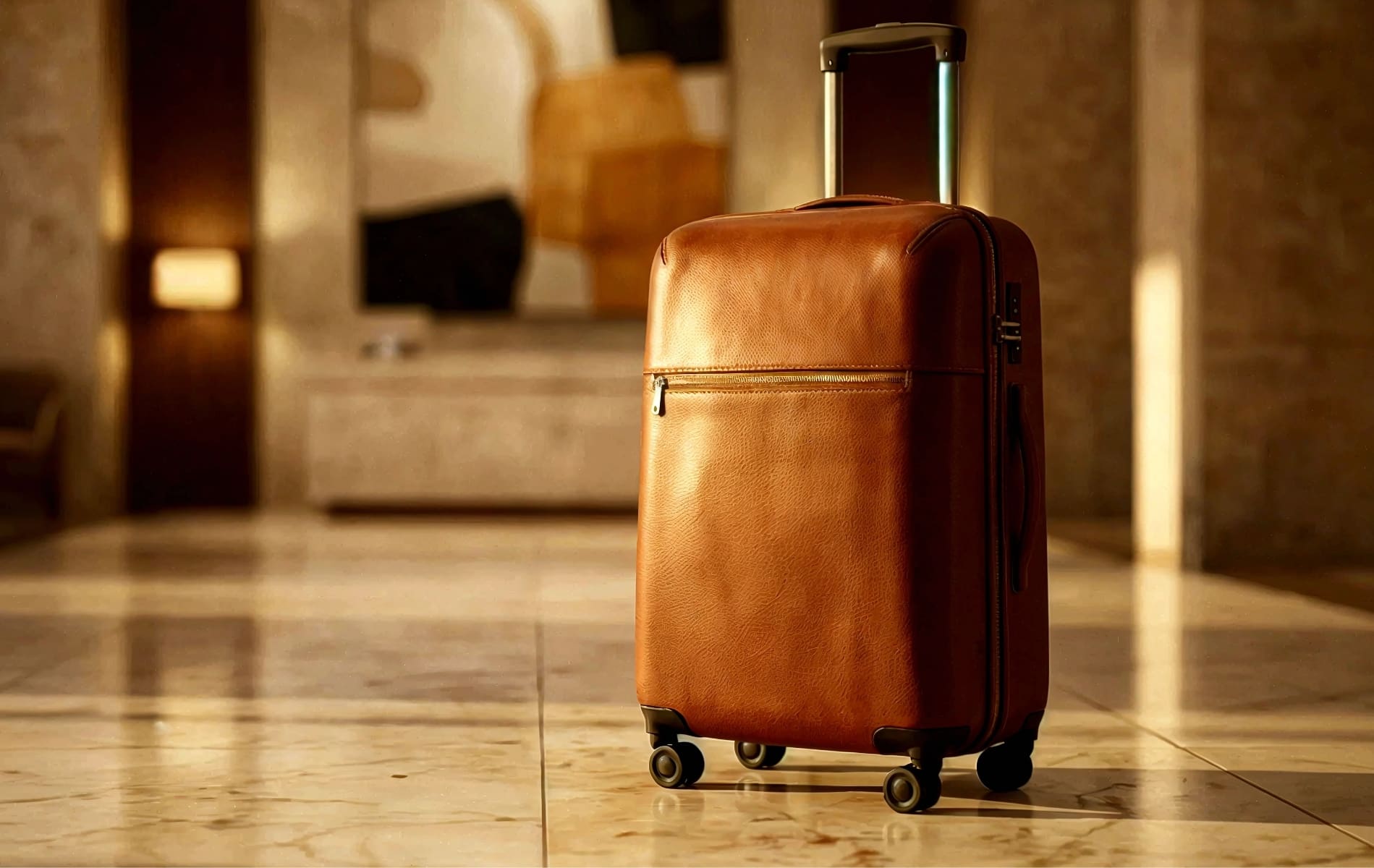
Whether you’re headed to a historic boutique hotel, a centuries-old B&B, or a modern resort, knowing how to keep your devices charged abroad can save you a surprising amount of stress.
I love an old building as much as anyone, but let’s be honest, the charm can fade quickly when that historic hotel or converted convent has one outlet (?!), inexplicably located behind an armoire on the opposite side of the room from the bed.
I’ve been there. It’s not fun.
That’s why I never travel internationally without a universal power adapter.
Before you travel, it is also worth checking the outlet type and voltage used in your destination.
Different countries use different plug configurations and electrical systems, and the two things are not interchangeable.
Double-check outlet types and voltage requirements for your destination here: Power Plugs & Sockets Worldwide.
Why You Need an International Power Adapter When Traveling Abroad
Old-world charm doesn’t always come with modern electrical convenience.
Older hotels and guesthouses may have:
- Only one or two outlets
- Outlets hidden behind furniture or tucked into odd corners
- No outlets beside the bed (which is, frankly, unacceptable when my phone is also my alarm clock)
- A different plug configuration from the one your devices use at home
A good multi-plug universal travel adapter with a bit of a cord can solve several of these problems at once.
But there is one very important distinction to understand before you start plugging things in.
Power Adapter vs. Voltage Converter: What’s the Difference?
These terms are often used interchangeably, but an adapter and a converter do two different jobs.
International Power Adapter
A power adapter changes the physical plug configuration so that your device can connect to an outlet in another country.
It does not change the voltage coming from that outlet. (stick with me, here)
That matters because electrical voltage varies around the world. The United States generally uses approximately 120V electricity, while much of Europe and many other destinations use approximately 220–240V.
Fortunately, many of the small electronics we travel with today are designed to accommodate both. But not all of them.
Look at the tiny print on your device or its charger. If you see something similar to:
INPUT: 100–240V, 50/60Hz
the charger is designed to accept that range of voltage (covering the voltage used in the US and in Europe/other destinations). In that situation, you generally just need the correct plug adapter, and a voltage converter is not needed.
Phones, tablets, laptops, cameras, and many other modern electronics commonly have power supplies designed for international voltage ranges, but always check the label on your particular device or charger rather than assuming. Using the wrong voltage will cause your electronics to fry and die. We don’t want that!
Voltage Converter
A voltage converter changes the electrical voltage itself.
You may need one if an appliance is designed for only one voltage and you want to use it somewhere with a different electrical system. Often, a voltage converter can be used as an adapter, but an adapter cannot be used as a converter.
This is especially important with heat-producing appliances such as:
- Hair dryers
- Curling irons
- Flat irons
- Other personal-care appliances
These can draw significantly more power than a phone or laptop charger and should never simply be plugged into a foreign outlet just because the plug happens to fit an adapter.
Some hair tools are dual-voltage and designed for international use. Others aren’t. (Sorry, but our beloved Dyson Airwrap is NOT dual voltage. I know. I know. I know. Leave it at home.)
Check the voltage printed on the appliance before you travel.
If the appliance is not compatible with your destination’s voltage, an ordinary travel adapter will not make it compatible. And if you’re considering a voltage converter, you also need to make sure the converter is appropriately rated for the wattage of the appliance.
Personally, this is one area where I prefer not to improvise. I’ve ruined very expensive hair tools learning this lesson. Don’t make the same mistake. Just leave them at home.
What I Recommend Packing
My international travel setup usually includes a few different pieces because they serve different purposes.
1. A Multi-Plug Universal Travel Adapter
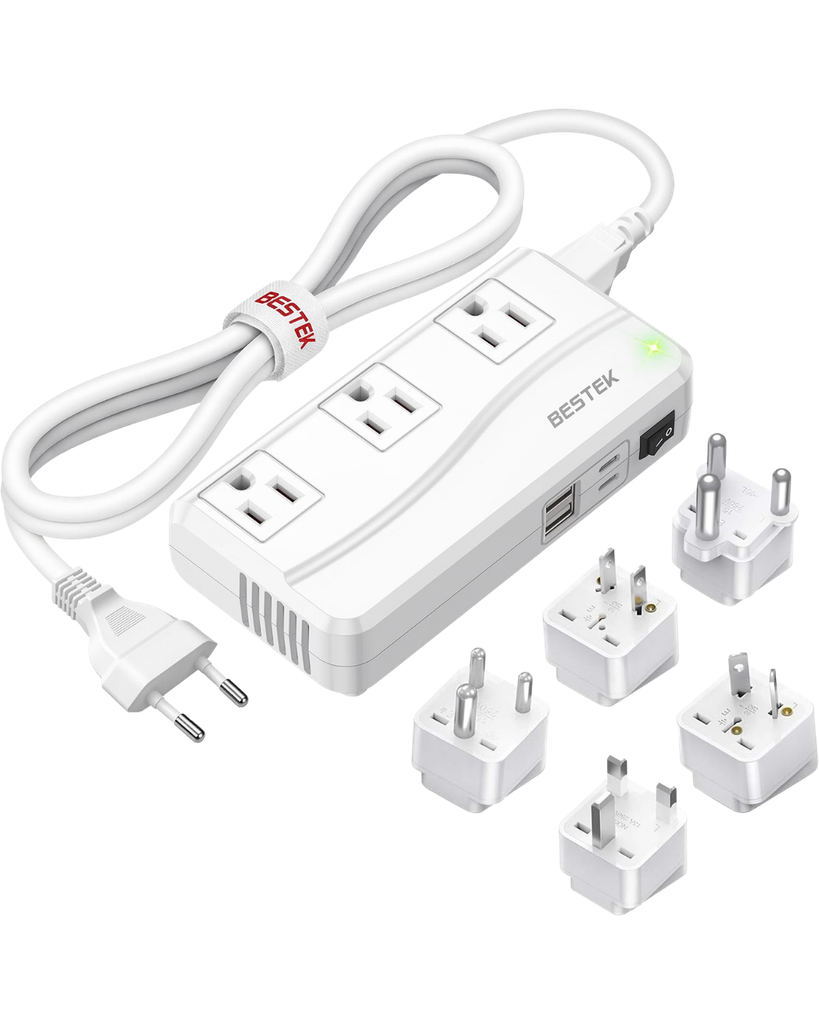
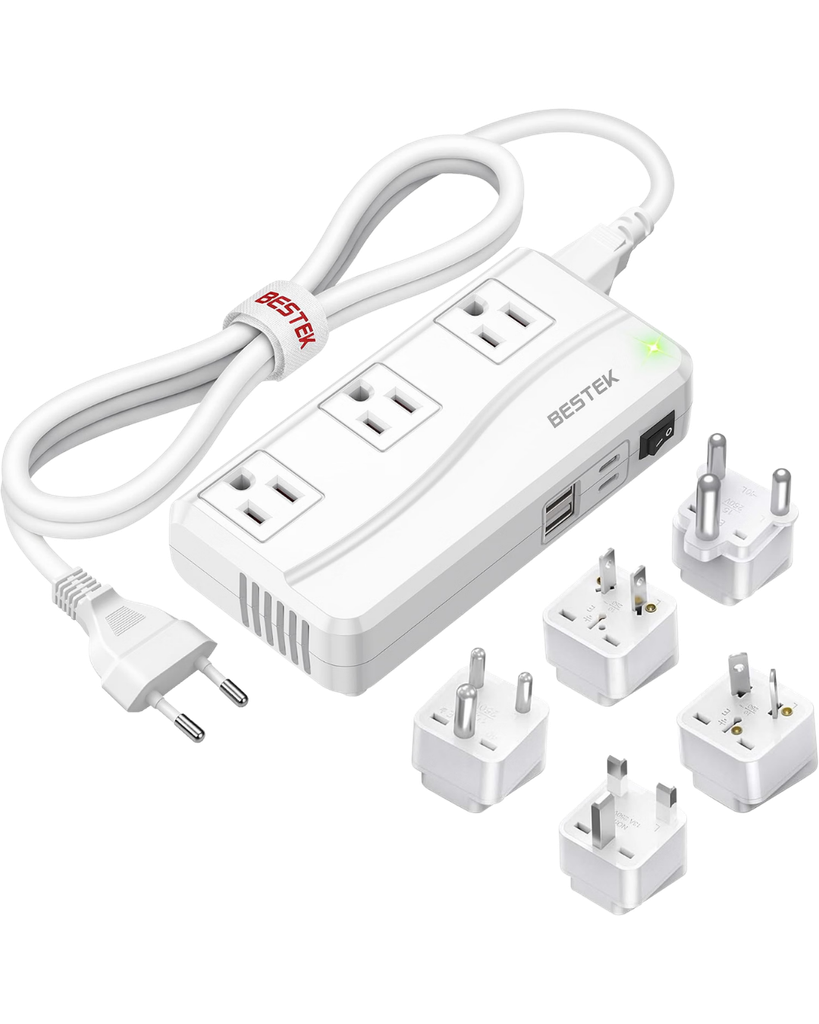
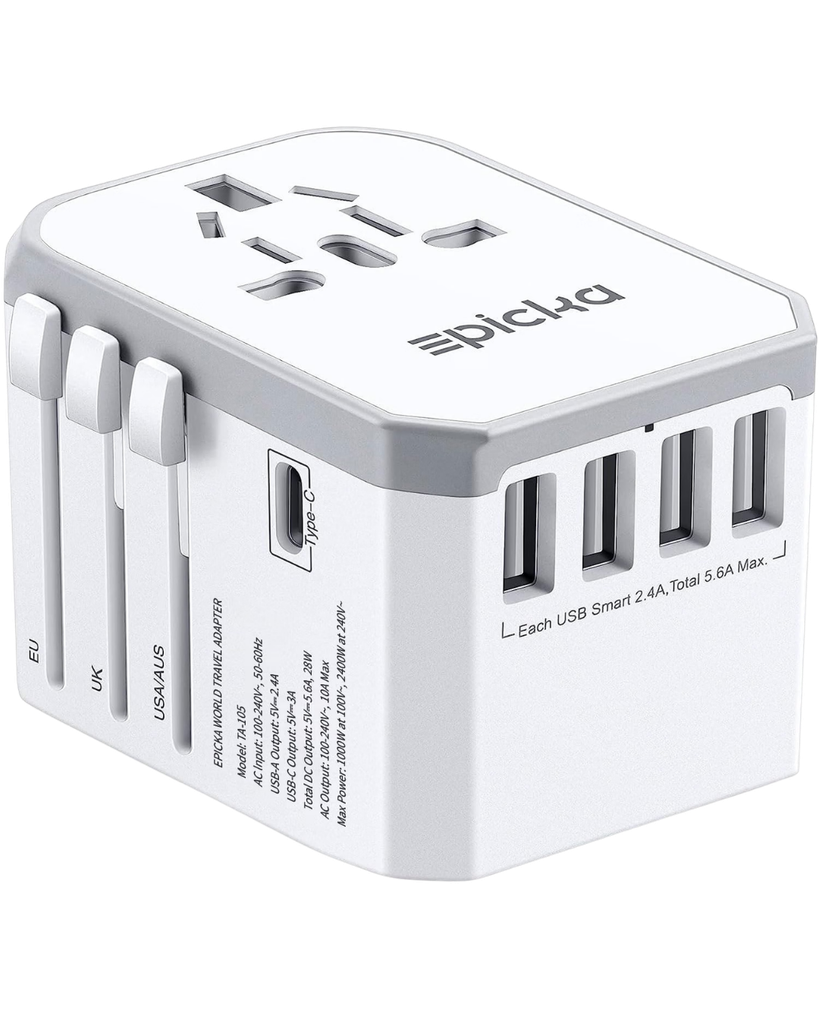
My multi-plug universal adapter/converter is my hotel-room workhorse.
I like having one adapter that can accommodate several devices at once, especially when I’m charging a phone, watch, laptop, earbuds, and portable battery overnight.
A version with a bit of a cord can be particularly useful in older hotels because the outlet may be nowhere near where you actually want your devices.
Just remember that multiple outlets do not mean unlimited power. Follow the manufacturer’s maximum load specifications and don’t use a travel adapter for appliances it isn’t designed to support.
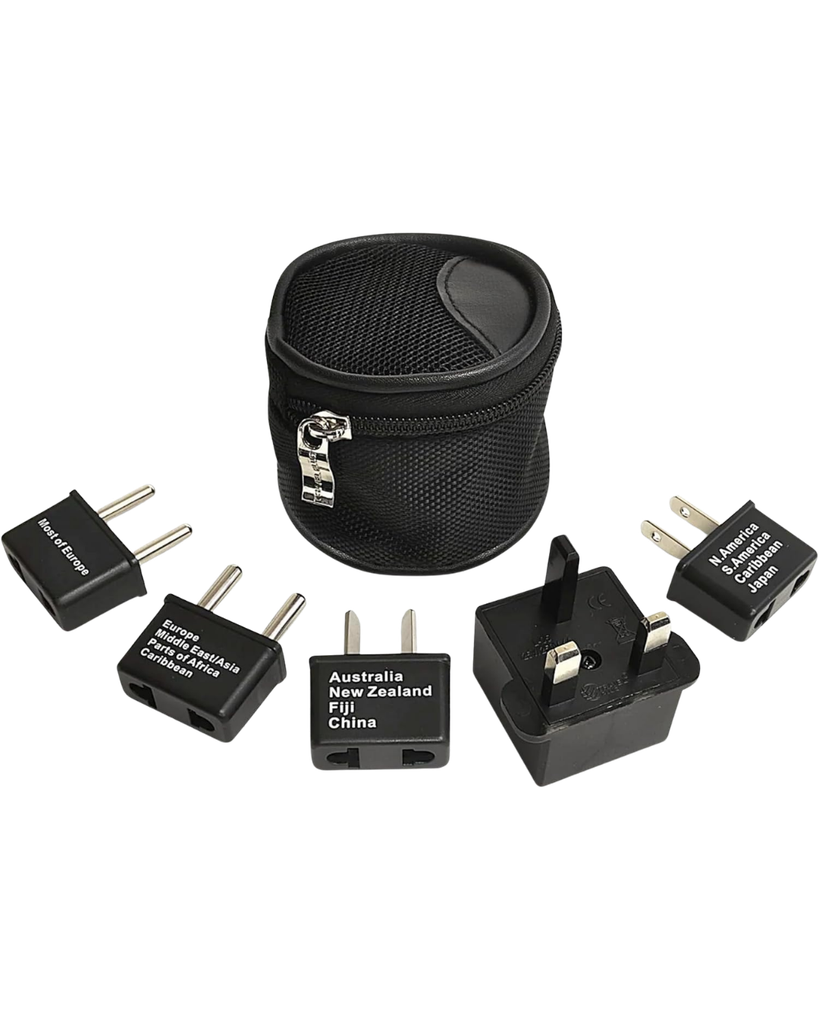
2. A Small Single-Plug Adapter
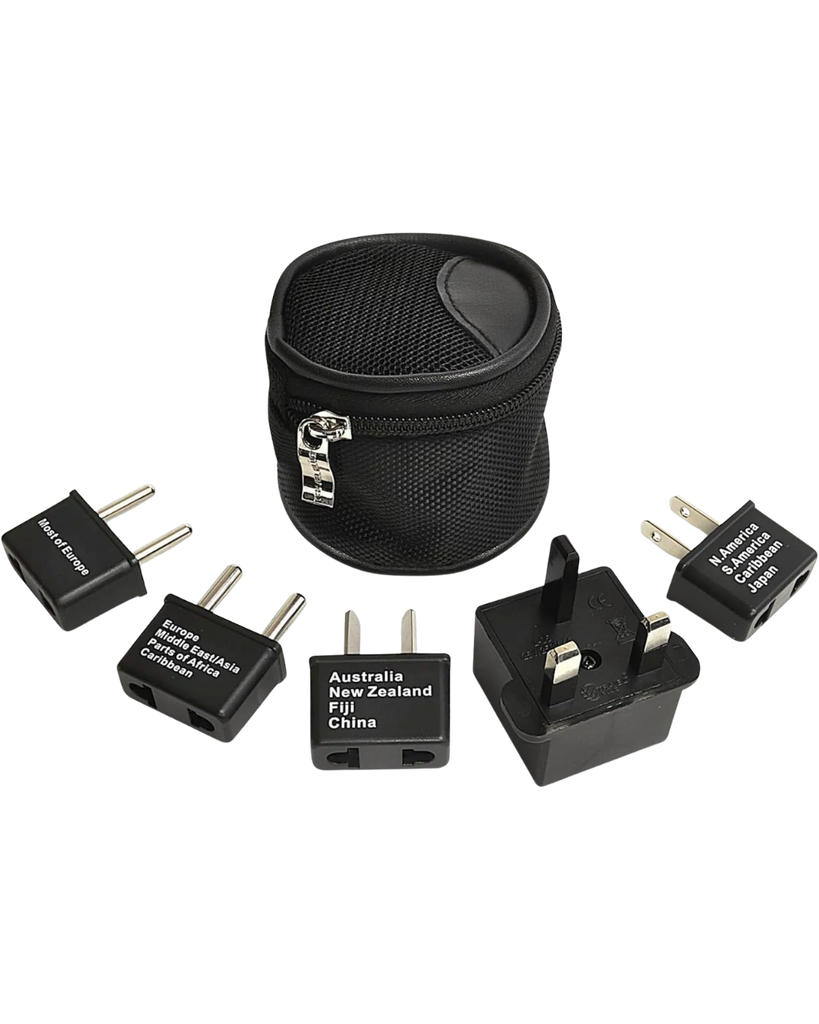
I also carry at least one basic single-country adapter appropriate for my destination.
It weighs almost nothing and gives me another outlet when the main adapter is occupied. Good for plugging my laptop in across the room from my bedside. It’s also smaller than the bulky multi-country adapter, so it’s easy to throw into my day bag if I expect to need a charge while I’m out.
3. A Universal Adapter
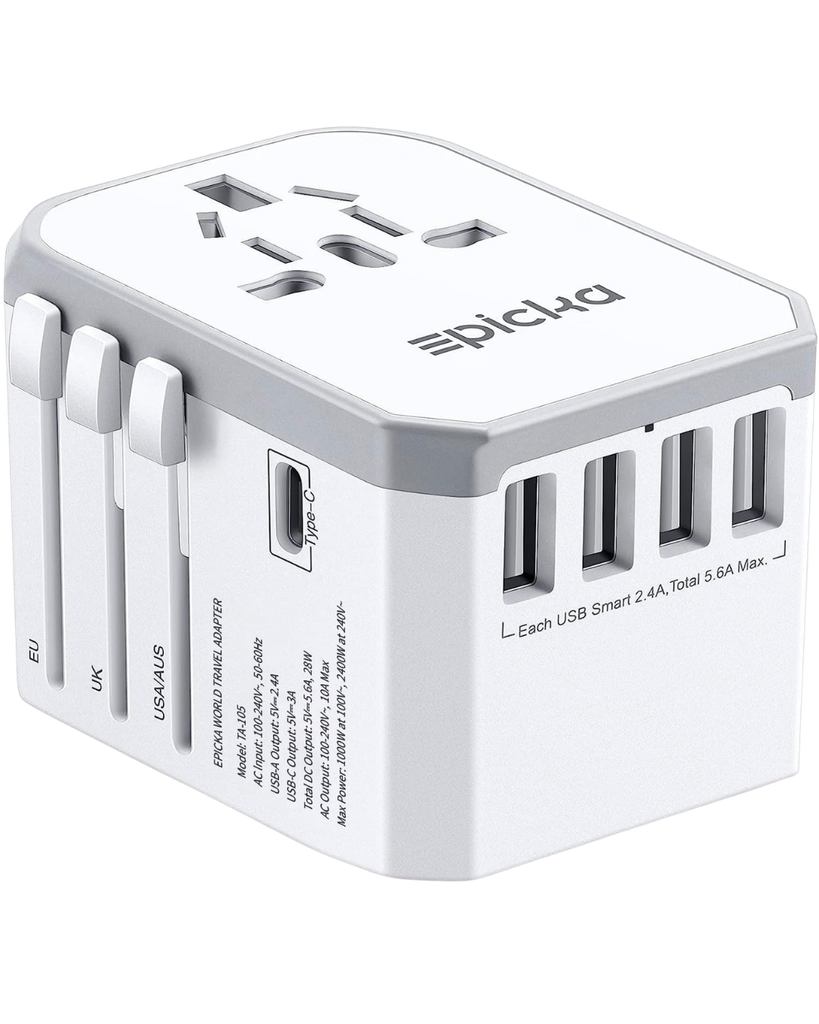
If I’m traveling through multiple countries, I want a universal adapter that works with several common international outlet types.
More importantly, this one stays in my carry-on. Which brings me to a lesson I learned the hard way.
Hard-Earned Travel Lesson: Keep an Adapter in Your Carry-On
A few years ago, I was traveling through Europe to the East in February and a historic snowstorm continually grounded and cancelled flights, rerouting me through three countries over two days. I only had my carry-on, and thank goodness I had packed an adapter that could work in multiple countries. Without it, I wouldn’t have been able to charge my phone or laptop during those unexpected layovers. I didn’t see my checked luggage for a week.
Ever since, a universal adapter has lived in my carry-on rather than my checked bag. It’s one of several small things I keep close at hand to make long travel days easier. (For more of my in-flight essentials and routines, see my practical wellness guide for flying.)
I also travel with a portable battery pack for busy airports, long taxi lines, trains, touring days, and those deeply irritating moments when every airport outlet within a 200-foot radius is occupied. *Just remember to pack this in your carry-on. They’re a no-no for checked luggage.
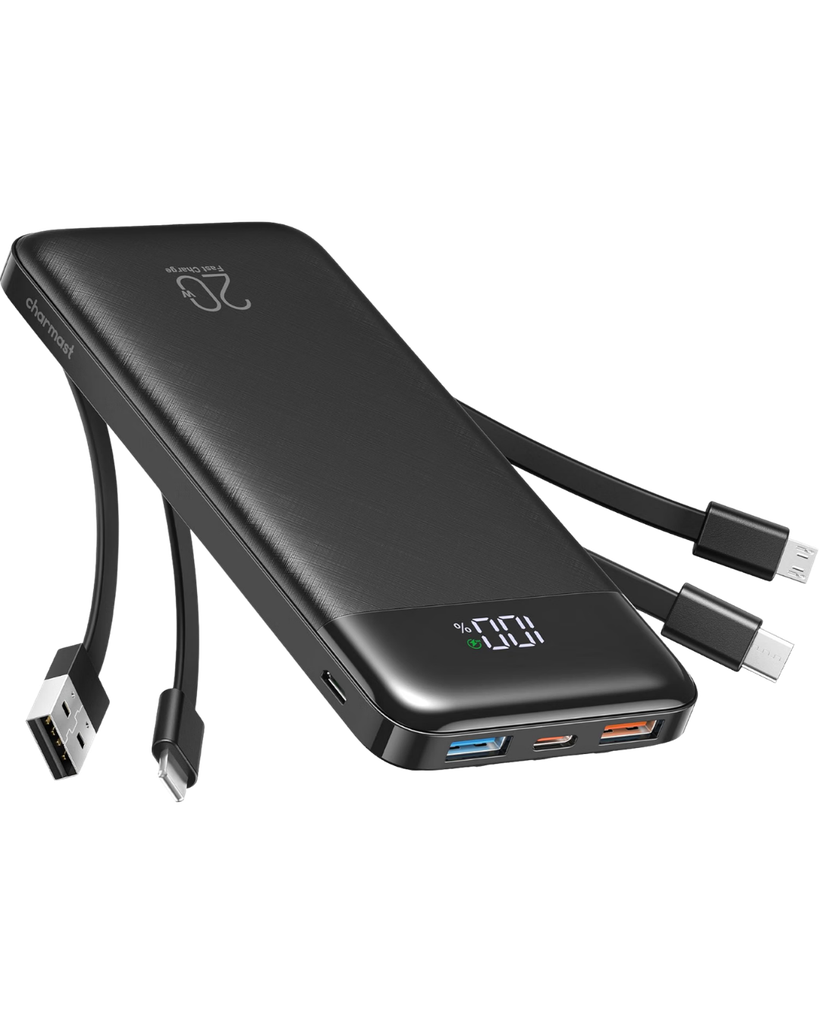
And don’t forget the charging cord if yours doesn’t have one built in. A fully charged battery pack without the appropriate cord is just a heavy little brick in your bag.
International Power Tips Before You Travel
Before leaving home:
- Check the plug type used at your destination
- Check the voltage requirements printed on each device or appliance you plan to bring
- Look for
100–240Von chargers rather than assuming a device is dual-voltage - Check the maximum power rating of your travel adapter or converter
- Be particularly careful with hair dryers, curling irons, flat irons, and other heat-producing appliances (personally, I don’t bring them unless they’re specifically labeled as dual-voltage.)
- Buy electrical accessories like adapters from reputable manufacturers and retailers
- Keep at least one international adapter in your carry-on
- Pack a charged portable battery pack and the appropriate charging cable
And if you’re staying at a good hotel, remember that you may not need to haul every electrical appliance across the Atlantic in the first place.
Most hotels provide hair dryers. Many luxury properties can also supply adapters or other small electrical necessities if you’ve forgotten something.
Sometimes the easiest travel solution is simply to ask.
Planning an international trip?
The right preparation makes international travel considerably easier. Atlas Aurora designs thoughtful, highly personalized journeys with the details handled from beginning to end. Get in touch to start planning your trip.
Shop My International Travel Power Essentials
As an Amazon Associate I earn from qualifying purchases, and I feature only products I personally use and trust.


