

Yes, Condiments. What they are, what they go with, and how to proceed
There is a particular kind of confidence the British have around condiments that Americans do not possess. Their sauce game is strong.
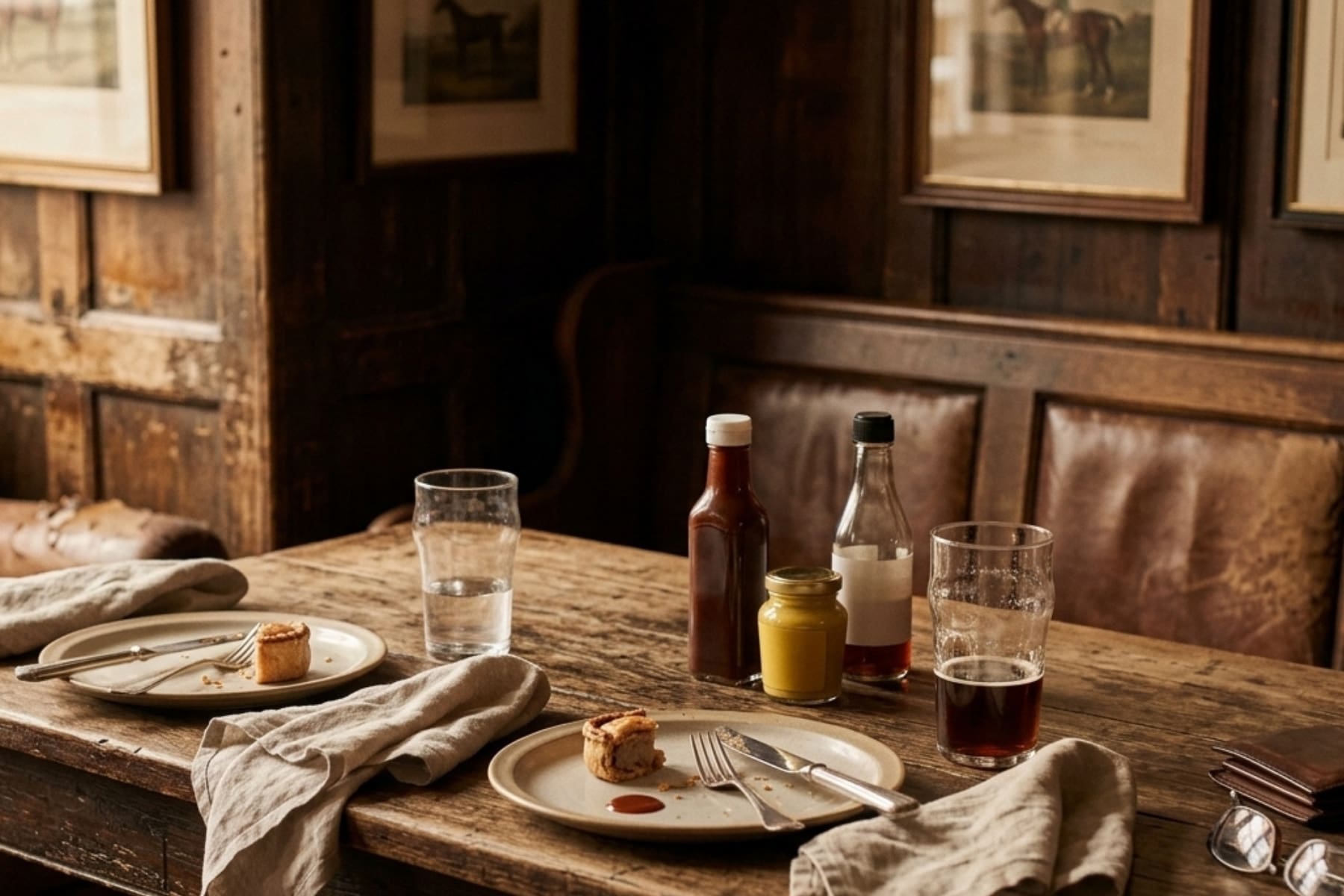
You sit down in a pub and there it is: a dark bottle of something called brown sauce. Not steak sauce. Not barbecue sauce. Not even a particularly descriptive brand name. Just brown sauce. Oddly descriptive. And yet, also not.
For somewhere that’s supposed to be so similar to America, it so is not in so many ways. Most especially: the condiments.
If you agree, consider this your introduction to the strange things in jars, bottles and tiny hotel-breakfast pots. Let’s begin.
The Ones You’ve Probably Heard Of, But Likely Don’t Actually Understand
Marmite
Marmite arrives in America with a reputation preceding it.
People tell you it is disgusting. People tell you British children are apparently raised on it. Someone will probably tell you it is good for a hangover. And eventually curiosity gets the better of you and you put some on toast (or, god forbid, a spoon).
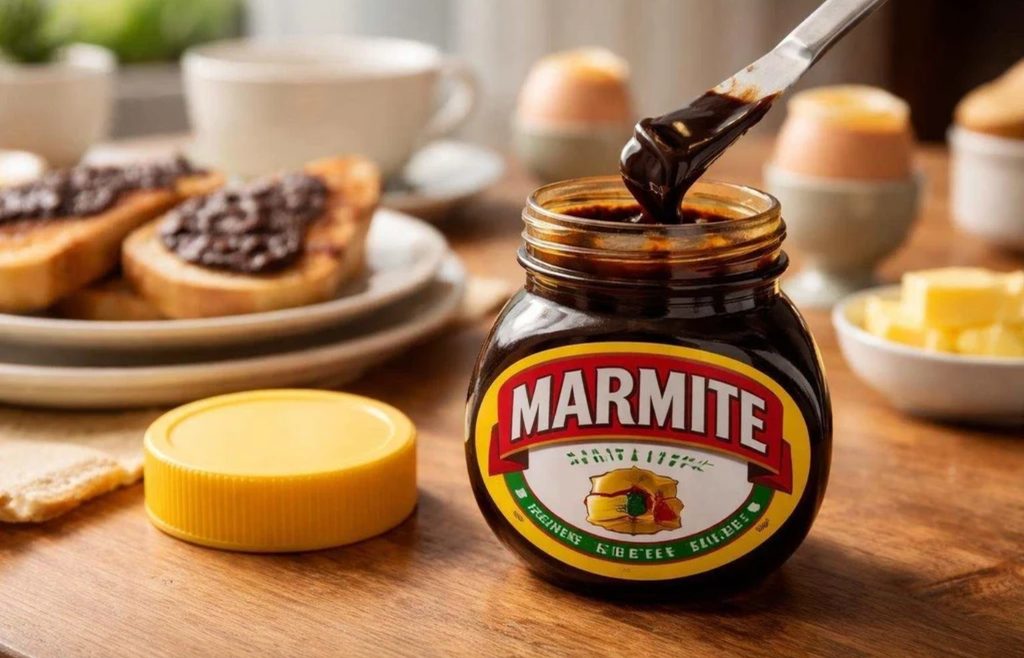
Marmite is a dark, salty spread made from concentrated yeast extract, a by-product of brewing beer. It’s been made in the historic town of Burton-on-Trent since 1902, and even Marmite itself has long leaned into the fact that people tend to either adore it or recoil from it. It’s kind of their schtick.
I fall somewhere in the diplomatic middle…ish. Let’s say I have a healthy respect for it.
I will politely eat Marmite on toast if someone puts it in front of me. I’m not buying a jar to keep in my pantry.
The mistake, I think, is expecting anything about it to taste remotely like the things Americans usually spread on toast. It is not jam. It is not peanut butter. It is not supposed to be sweet. It is salty, deeply umami and very… assertive, and ideally spread rather more sparingly than you think it should be.
Think less “spread” and more “wet seasoning.”
Colman’s English mustard
I’m a mustard person, so Britain and I are very compatible on this point.
Still, the first proper spoonful of English mustard can be startling.
Colman’s, the famous yellow pot, is not the mild yellow squeeze-bottle mustard of an American cookout. It is made with both white and brown mustard seeds and has a bite that goes straight up the nose and makes you reconsider your future portioning decisions.
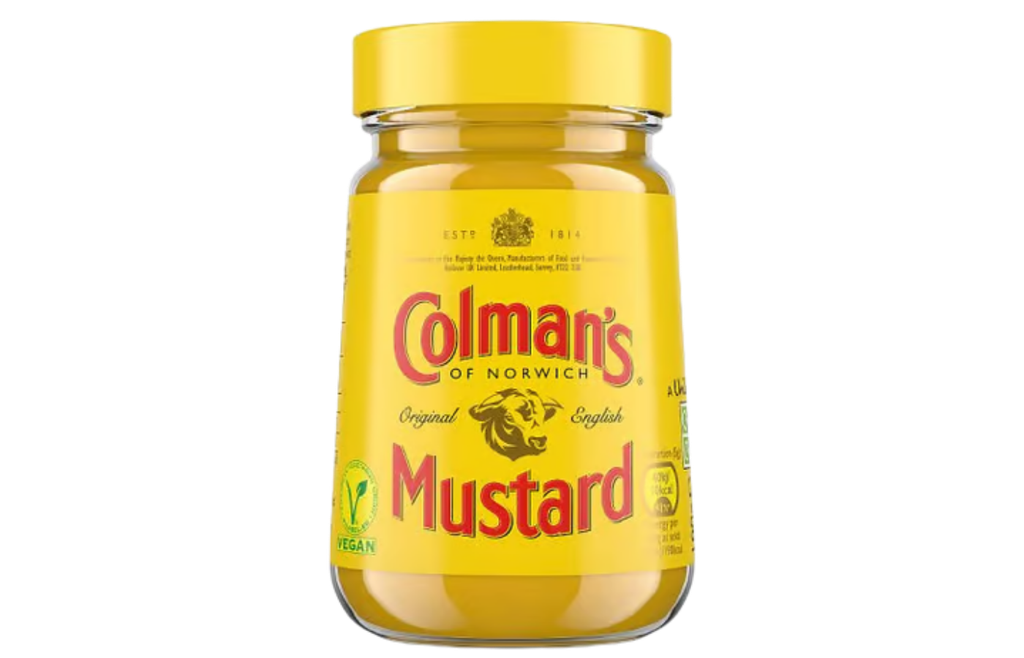
Colman’s has been producing mustard since 1814 and still very much markets based on the strength of its spiciness.
It’s excellent with roast beef, ham and other rich meats precisely because it cuts through them.
Dijon is the comparison many Americans will understand, but Dijon is smoother and generally more restrained. English mustard is brighter, hotter and considerably less forgiving.
Proceed confidently. It’s delicious. Just perhaps not by the tablespoon.
Worcestershire sauce
First, we need to discuss the pronunciation.
Worcestershire is one of those British words that looks like someone forgot to remove unnecessary letters. (There are many of these. I’m looking at you, Leicester.)
Americans routinely stare at the bottle and produce something in the general neighborhood of wor-chester-shire. Britain, meanwhile, carries on saying something much closer to WUSS-tuh-shuh, depending on accent.
This is a recurring British lesson I’ll give you now to save you the embarrassment:
Leicester = “Lester.”
Worcester = roughly “WUSS-tuh.”
British place names contain traps. Proceed with caution.
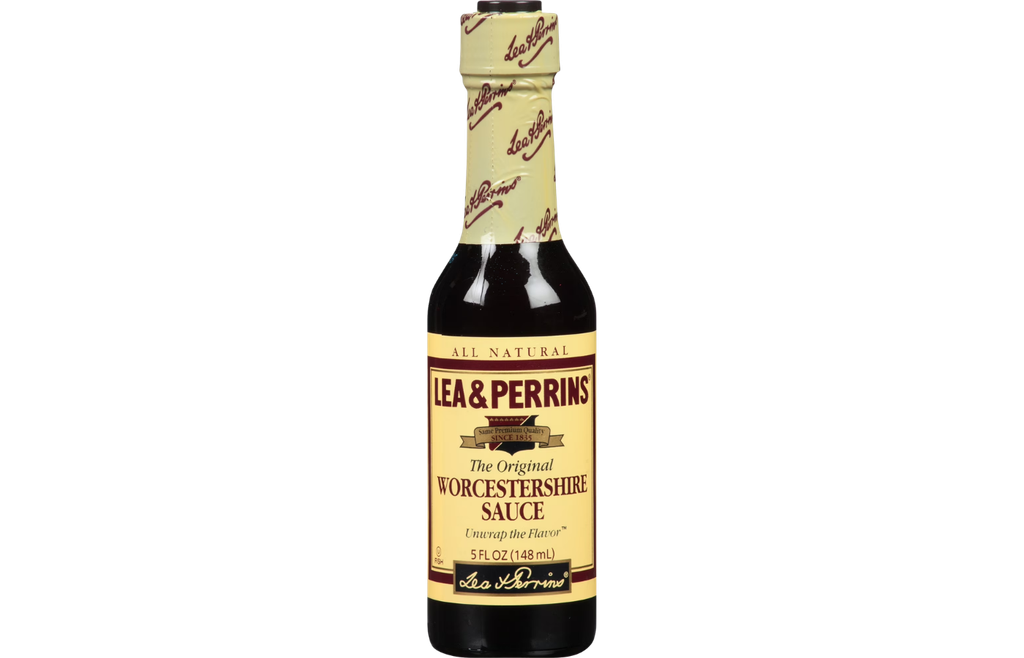
And here’s a useful historical Easter egg: Worcestershire sauce actually is from Worcester. Local chemists John Wheeley Lea and William Henry Perrins launched Lea & Perrins, the original makers of the sauce, there in 1837.
Worcestershire sauce itself occupies an interesting space between condiment and ingredient. It’s watery thin, so you may splash it directly onto food, but you are just as likely to encounter it mixed into something else: sauces, meat marinades, savory dishes, cheese on toast or a Bloody Mary.
It is one of those bottles you recognize long before you necessarily understand what anyone is doing with it.
Marmalade
Marmalade, to me, equals Paddington Bear.
That is probably true for quite a few Americans who may or may not have ever actually tasted it.
The important thing to understand is that marmalade is not simply orange jam. It’s a preserve made from citrus fruit, and the peel gives it a characteristic bitterness that can range from gently bracing to, in the case of one homemade batch a relative once gave us, practically medicinal.
Generally store-bought marmalades are delicious. Wilkin & Sons is one British brand you’ll see often. Love it or hate it, Meghan’s As ever Orange Marmalade is absolutely delightful. Not sorry.
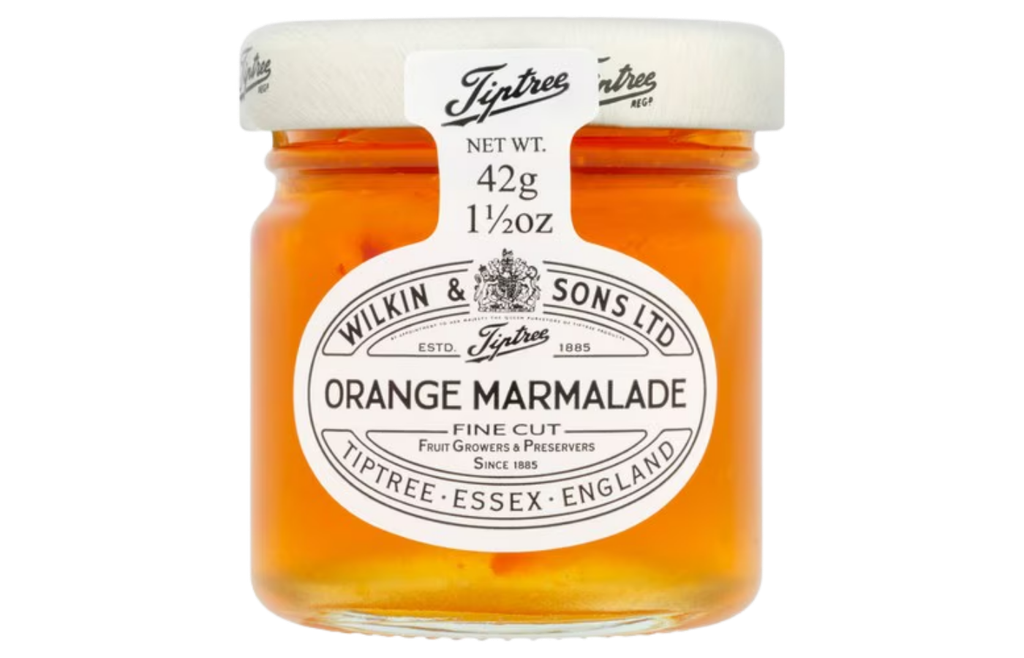
This is part of marmalade’s charm. It is sweet, yes, but good marmalade keeps some edge. And in Britain, particularly at breakfast, it feels entirely at home beside toast, tea and those tiny individual pots of preserves that always appear on hotel breakfast tables. It’s nice that the spreads aren’t all about the super sweet. Marmalade provides a little something complicated for your toast.
The Ones You May Not Discover Until You Get There
Brown sauce, especially HP
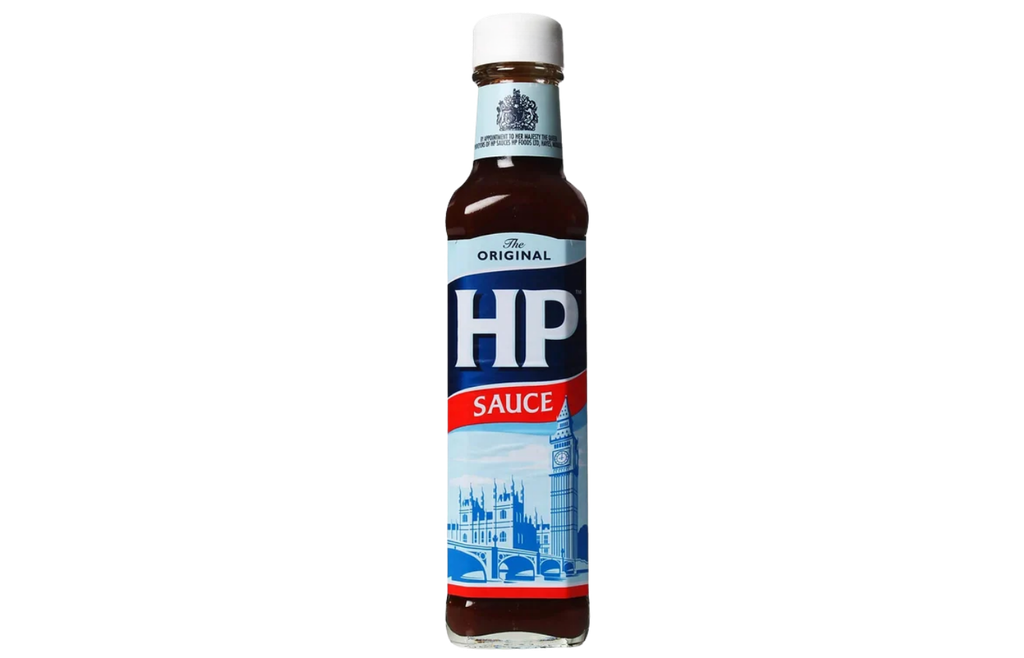
Brown sauce may be my favorite example of British understatement.
It is brown. It is a sauce.
Apparently everyone felt that covered it. Say no more.
HP is the best-known version, and it was only through spending time in British pubs that I learned what it was. I kept seeing it sitting on tables next to ketchup, eventually tried it, and discovered that I freaking love HP sauce.
The confusion doesn’t end there. The name ‘HP Sauce’ doesn’t actually describe the product. Oh no. Of course not.
Apparently HP stands for ‘Houses of Parliament’ because it was once used in a restaurant in the Houses of Parliament sometime around the turn of the 20th century. Again. So descriptive, and yet, so very not. I digress…
If you are American, your first comparison may be A1 steak sauce. Mine certainly was.
But they are not the same.
HP is thinner to my palate, more vinegary and less sweet. Its ingredients include tomatoes, malt vinegar, molasses, dates and tamarind, among other things, which helps explain that combination of fruity depth and acidic tang. The tang is real. Brown sauce is deeply associated with things like full English breakfasts, bacon sandwiches and hearty pub food.
I mostly like it with chips. (fries)
Branston pickle
Until writing this article, I could not have confidently articulated to you what exactly Branston pickle is.
It’s for sure not a mustard. It’s not quite what an American generally imagines when hearing the word “pickle,” either.
Worry not. Research has been conducted.
Branston is a chunky, sweet-and-tangy brown condiment first produced in the village of Branston, Staffordshire, in 1922.
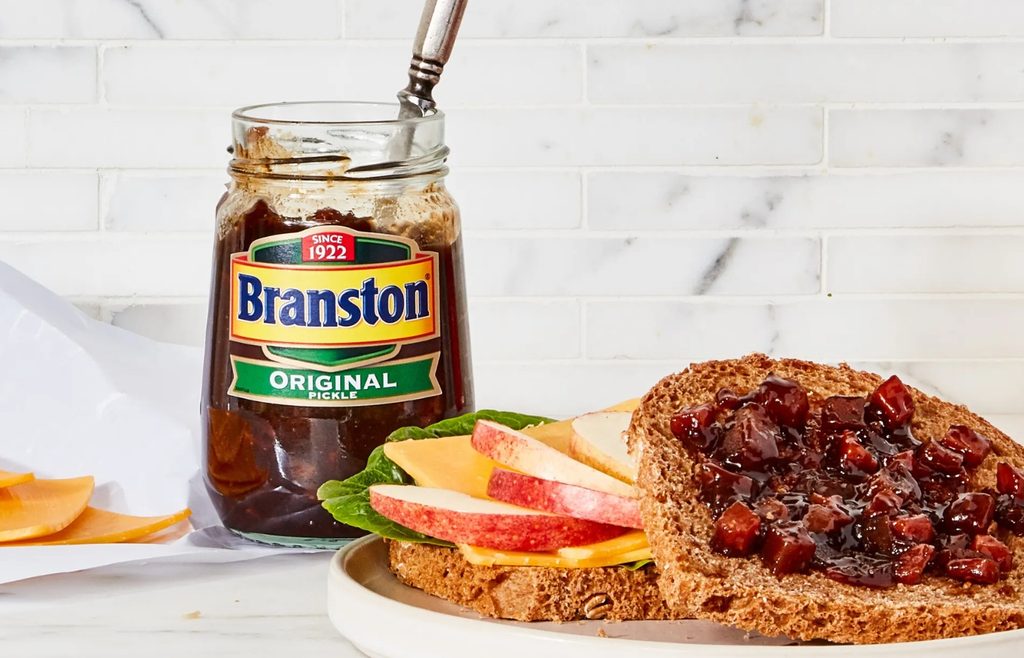
The original contains diced vegetables including carrot, rutabaga, onion and cauliflower in a thick, sweet, spiced and vinegary sauce.
It has become particularly associated with cheese sandwiches, and it remains a fixture of the British lunchtime universe of cheese, cold meats, bread, pork pies and things scooped from jars with sticky spoons.
This is where the British use of “pickle” requires a small mental adjustment from what we Yanks are used to.
It is important to note: In British English, “pickle” can absolutely mean a vegetable preserved in vinegar. But it can also mean a cold, thick, spiced condiment made from preserved fruits or vegetables. When someone refers to “pickle” in a cheese-and-pickle sandwich, this second meaning is generally what they’re talking about.
So no, a cheese-and-pickle sandwich does not mean someone has tucked a dill spear between two slices of cheddar. It’s more of a sticky smear of finely chopped, sugary, vinegary veg spread with a tang to it.
This is important cultural information.
Piccalilli
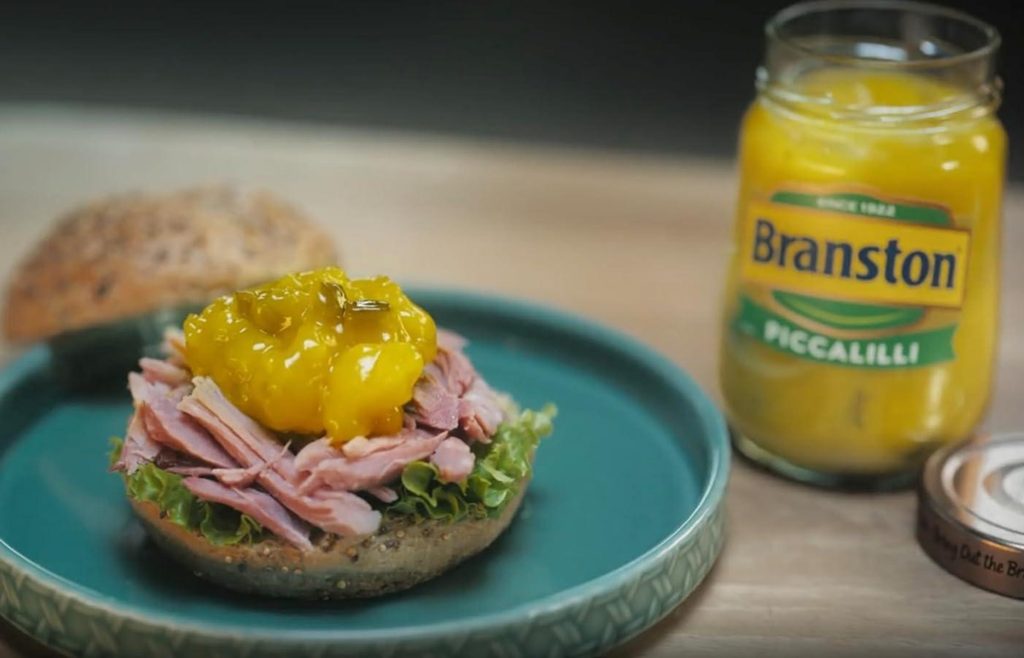
As it happens, also produced by Branston, piccalilli is a kind of large-chunk vegetable mix in a tangy, turmeric-y mustard-y sauce. It’s something that’s more piled on than spread on.
It is a chunky pickle* (*see above) of vegetables, often including things like cauliflower and onions, in a sharp, mustardy, turmeric-spiced sauce. It’s scooped out of a wide-mouthed jar with a spoon and usually paired with mature cheese, pork pies, cold meats and ploughman’s lunches.
If Branston pickle belongs to the brown end of the vinegary British condiment color chart, piccalilli occupies the violently yellow end, and with a chunkier, brighter flavored edge.
Salad cream
Salad cream sounds innocent enough until an American realizes it is not exactly salad dressing and not exactly mayonnaise. Step lightly here.
Heinz launched its Salad Cream specifically for the British market in 1914. The modern version contains vinegar, oil, sugar, mustard and egg yolk, resulting in something tangier/more vinegary and looser than mayonnaise. (I don’t like that I had to use ‘looser’ either, but here we are. Let’s move on)
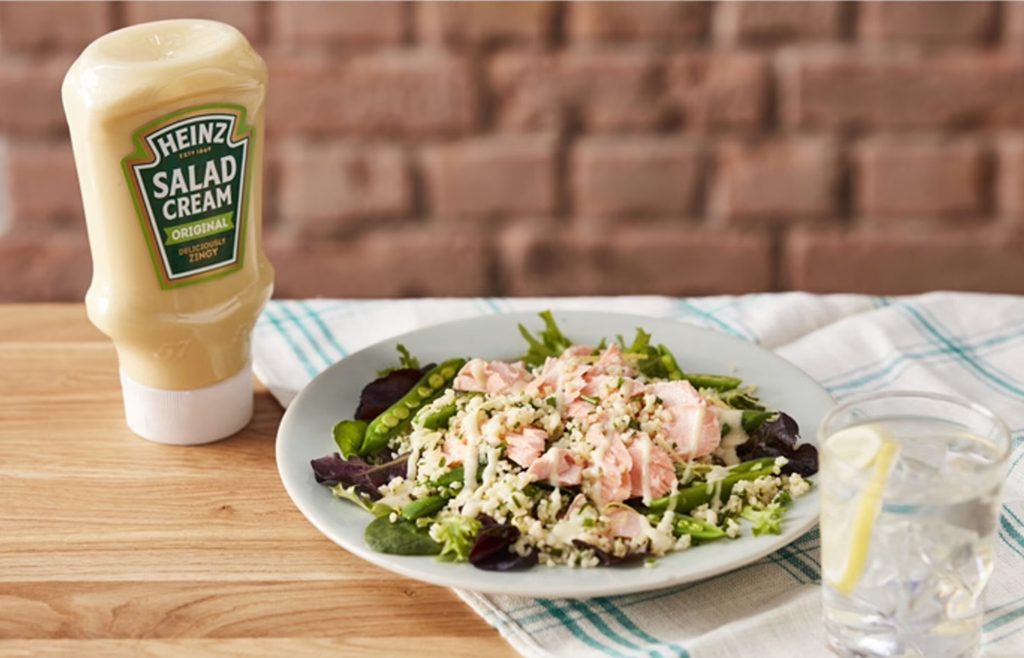
It can go on salads, certainly, but you’ll also find it on sandwiches, cold foods and apparently whatever else a loyal salad-cream follower has decided requires it.
It’s the household ‘put it on everything, dip everything into it’ sauce, kind of like Americans and our ranch dressing.
Please, by all that is Hidden Valley and holy, do NOT confuse salad cream with ranch dressing. They are absolutely not the same.
This is a condiment I still consider in field research.
I’ll report back. Maybe.
Marie Rose sauce
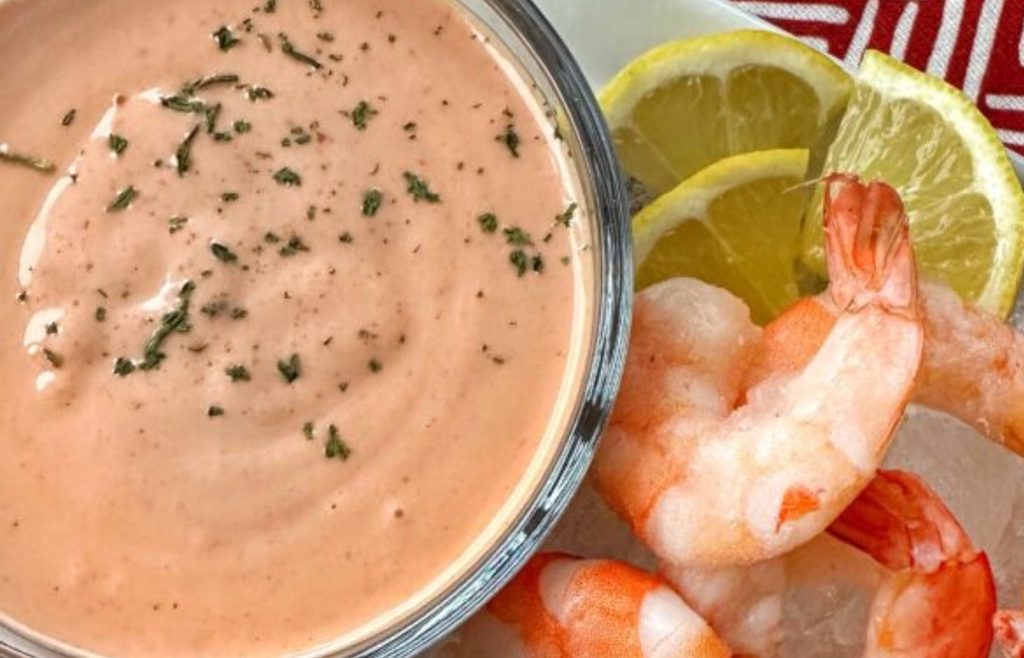
Marie Rose is a pink seafood dipping sauce, usually for a prawn (shrimp) cocktail, but it’s not the usual bright red cocktail sauce you’re probably thinking of. Also like cocktail sauce, it’s not a brand name. Marie Rose sauce is Marie Rose sauce, regardless of what company makes it.
It’s made from mayonnaise and ketchup, usually sharpened with Worcestershire sauce, lemon or something else with a little heat, like Tabasco.
It’s not exactly Thousand Island, though it looks kind of like it. Thousand Island is sweeter and usually has little chunks of relish in it.
It’s also not the basic “fry sauce” that’s just ketchup and mayo mixed together.
The lemon, Worcestershire or heat gives Marie Rose more tang and brightness, which makes it work particularly well with seafood. Like a creamier, calmer cocktail sauce without the horseradish kick.
It’s for sure a seafood dip, and the Brits love a prawn cocktail. It makes sense they’d find a way to bring mayonnaise into the picture somehow.
Clotted cream
Clotted cream technically deserves its own Field Guide entry entirely. I’ll get to that later.
Americans see “cream,” encounter something thick and luxurious, and quite reasonably expect it to taste super sweet, something like whipped cream.
It does not. Please hear me. Clotted cream is not whipped cream.
Clotted cream is extraordinarily rich but not particularly sweet on its own. It’s somewhere between whipped butter and crème fraîche in texture and taste.
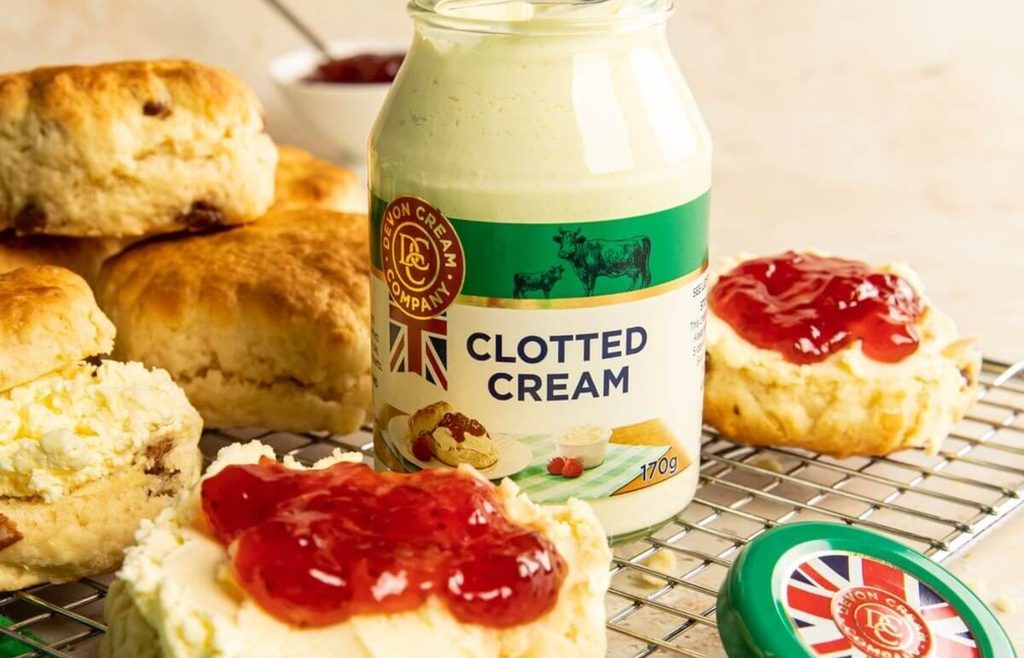
It’s often spread on scones with jam. Which, believe it or not, has caused much historical upheaval among the people of Britain.
In Devon, tradition says cream first, then jam. Cornwall says jam first, then cream. This is a big issue.
Having tried it both ways, I am firmly cream first. Because it makes more structural sense and is less messy.
I expect vigorous correspondence on this matter. Please be kind.
The Pairings Nobody Explained to Us
This is perhaps the most important category for anyone trying to achieve cultural fluency.
Britain has a series of traditional food pairings and many have become common in fine dining around the world. Some may be more obscure. Let’s review.
Lamb + mint sauce.
Roast beef + horseradish.
Pork + apple sauce.
Chips + curry sauce.
Turkey (or other roast poultry) + Bread sauce. (yes, we’ll discuss)
Fish and chips + Malt vinegar.
Mint sauce with lamb
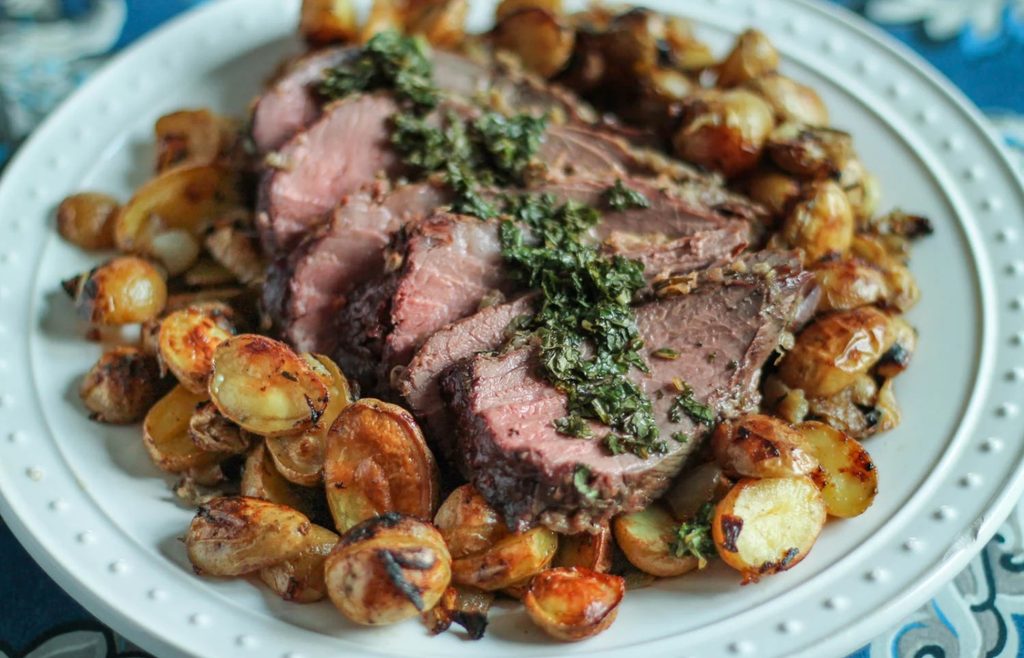
Mint sauce is essentially chopped mint with vinegar, usually softened with a little sugar. Its sharpness and herbal freshness cut through the richness of lamb, which is why the pairing has endured.
You may also see mint jelly, which is the sweeter, more jelly-set cousin of mint sauce. Both are traditionally paired with lamb, but classic British mint sauce is the thinner, sharper version, made with chopped mint, vinegar and a little sugar.
I don’t know why someone first thought of putting mint with lamb, but I do like it.
Horseradish with beef
Horseradish gives you that nasal, wasabi-adjacent heat that works especially well against rich, fatty beef.
It is particularly traditional alongside roast beef.
English mustard frequently joins the party as well, because apparently roast beef deserves spicy choices.
Due to my general support for all mustards, I agree with this, and by spicy extension, horseradish as well.
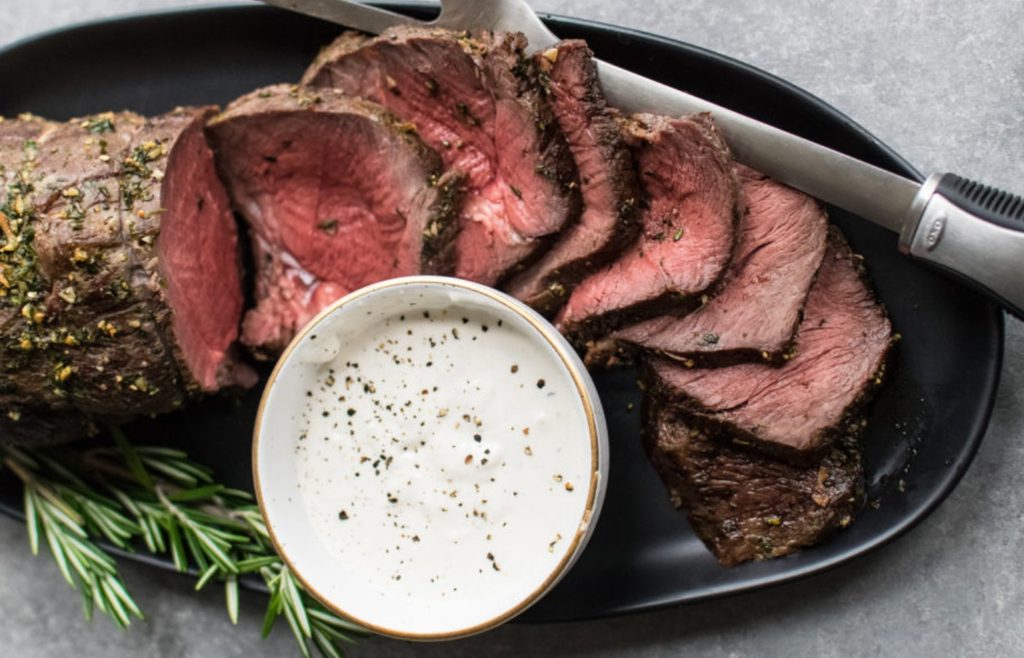
Horseradish itself isn’t uniquely English, but they adopted it from continental Europe. By the late 1600s it had become a standard accompaniment to beef, and once roast beef became one of the defining dishes of English cooking, horseradish more or less consistently came along with it to tame beef’s fatty richness.
Apparently George Orwell even wrote in 1946 that hot roast beef was “almost invariably” served with horseradish sauce. So there you go.
Apple sauce with pork
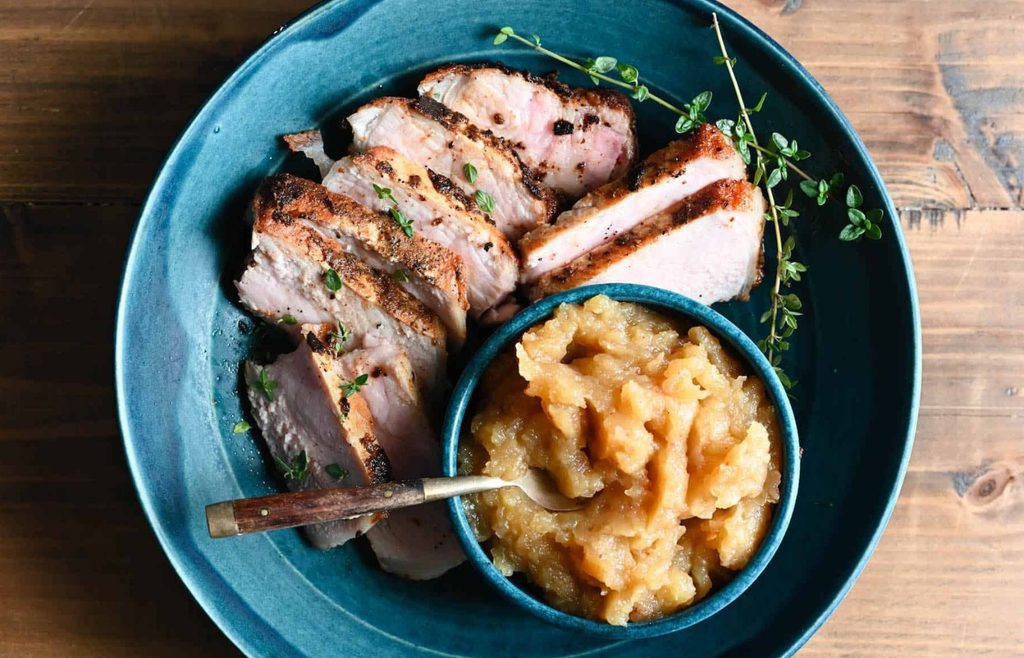
This one may be slightly more instinctive to Americans because we aren’t exactly strangers to combining pork with sweetness. Think glazed ham, sweet barbecue sauces, or pork paired with fruits like pineapple.
Of course, apples aren’t uniquely British, but they’ve been part of British orchards and cooking culture for centuries.
Yes, apple sauce still seems a little out of place on a dinner plate after the age of 6, but now you see why it’s a classic pork roast pairing in Britain. The logic is similar: pork is rich; apple balances that with sweetness and acidity.
Rich meat + sharp or sweet counterpoint = balance.
Britain isn’t putting fruit next to your meat just to see your reaction. It has a purpose. (And generally it’s a bit more sophisticated than the Mott’s applesauce mush you’re used to seeing)
Bread sauce with poultry
Bread sauce deserves special recognition because it sounds like a joke.
Like, really. Bread sauce?
I’m reporting to you with all sincerity that it is a real sauce, and it is, in fact, made from bread.
It’s a warm, creamy, savory concoction made from milk infused with things like onion, cloves and bay, then thickened with breadcrumbs. It’s particularly associated with roast poultry and Christmas dinner, especially turkey.
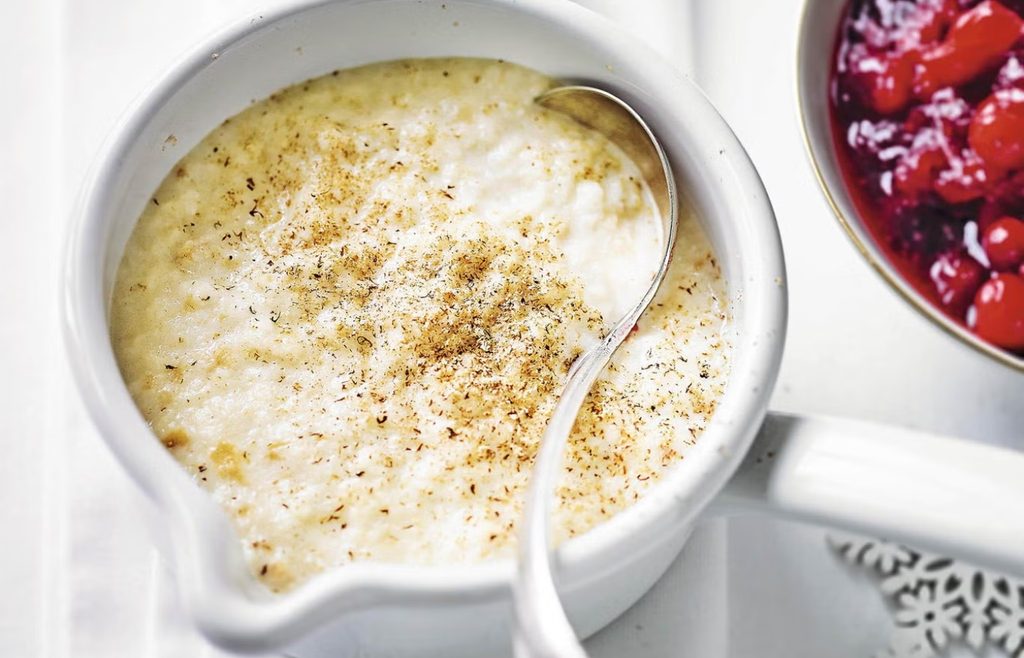
It looks a bit like what an American Southerner would identify as white gravy, but please do not confuse this with white gravy. It is not that.
Don’t fight it. Just try it. It’s good. We are learning.
Curry sauce with chips
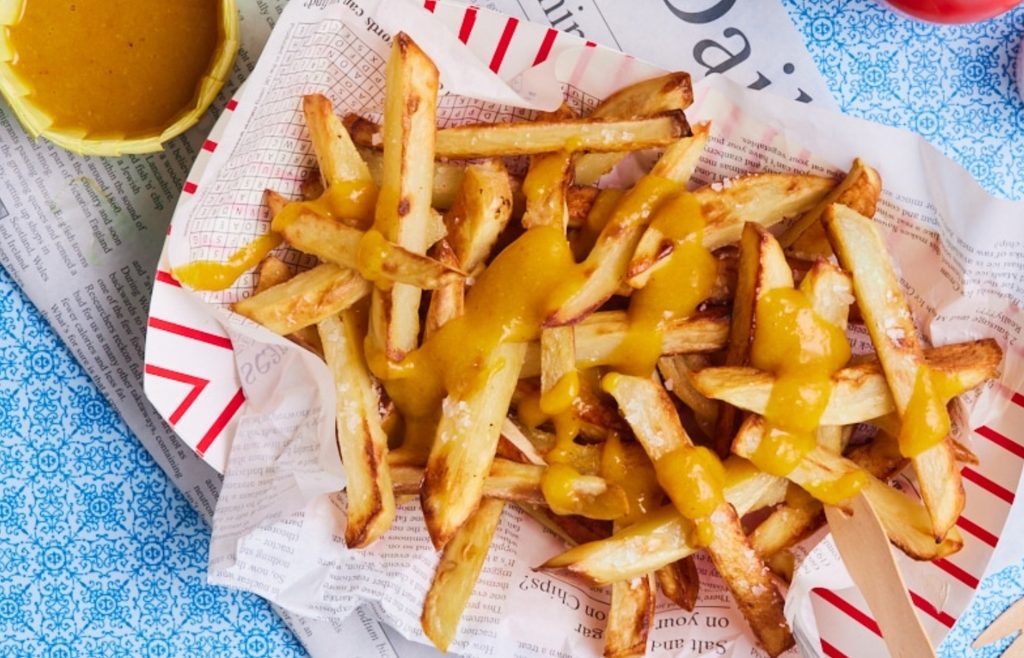
Americans tend to compartmentalize curry as Indian food. That isn’t wrong, exactly, but Britain’s relationship with curry is far more complicated and deeply ingrained in modern British food culture.
Think of it like tacos to Americans. They’re Mexican, obviously, but America has adopted them so thoroughly that they’re part of our everyday food culture too.
“But Kelly,” you might say, “England is not adjacent to India like America is to Mexico. How did this happen?”
British fascination with Indian food stretches back centuries and is inseparable from the history of the sprawling British Empire.
English recipe books were describing meat prepared “the Indian way” as early as the 17th century and curry became increasingly fashionable among Britain’s upper and middle classes during the 19th century. It snowballed from there.
That story deserves its own article. We won’t go into it here.
For this list’s purposes, know this: ordering curry sauce with chips is not Britain trying to do someone else’s cuisine. Curry has been woven into British food culture for a very long time.
And it’s very good on chips (fries). Given the opportunity, get the curry sauce.
Fish & Chips with Malt Vinegar
Malt vinegar is one of those smells that tells you fish and chips are nearby before you see them.
It’s darker and more robust in flavor than the white vinegar most Americans know, with a malty, slightly toasty edge. The classic move is to shake it over hot fish and chips, usually with enormous amounts of salt.
I like the taste more than the smell, which is saying something because the smell is something. I find people are divided into those who really like or completely despise the smell of malt vinegar.
I am, body and soul, the latter.
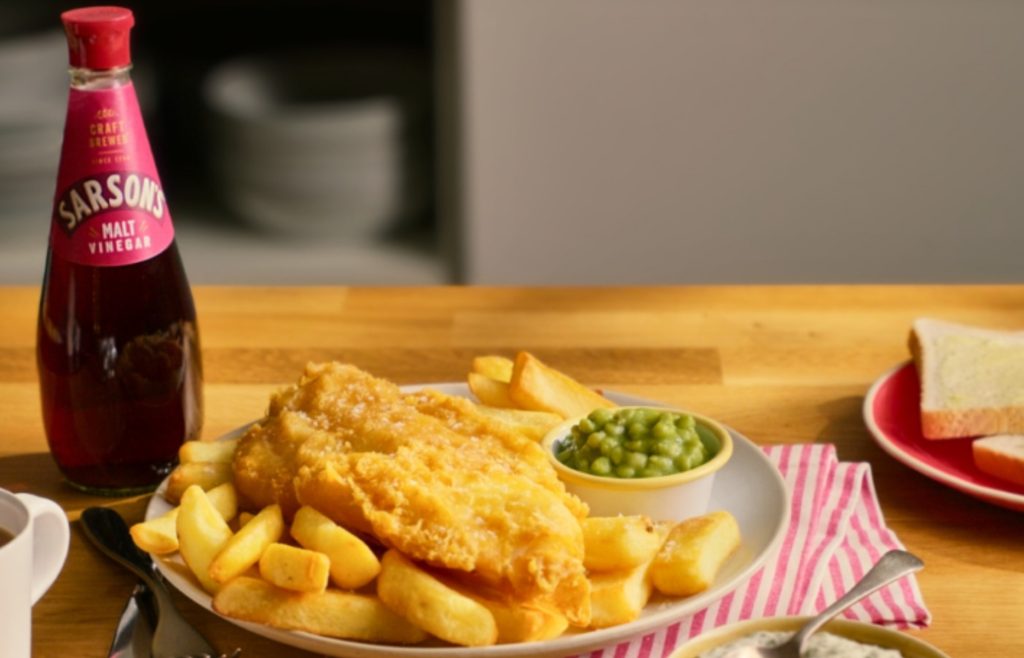
There doesn’t seem to be one grand origin story for malt vinegar on fish and chips. It was already Britain’s everyday vinegar thanks to the country’s long beer-brewing tradition, so when fish and chips took off as a working-man’s food in the Victorian era, the local vinegar came along for the ride. The sharp acidity also happens to be exactly what hot, fried fish and potatoes need.
The vinegar for sure cuts through all that fried richness from the fish batter beautifully. I just have to hold my breath long enough to get it shaken out onto the plate and then all is well.
The Point Is Not Memorizing the List
You do not need to arrive in Britain having memorized which condiment accompanies every possible form of protein and carb.
Honestly, part of the pleasure is discovering these things. So please, try things. Try all the sauces on all the things and make your own decisions.
Soon the HP bottle with its charming blue label on the pub table is not just a bottle you ignore because you don’t know what it is. You’ll start asking for it when it’s not automatically in the caddy with the ketchup and mustard.
And the yellow pot of Colman’s won’t just be a cute (it’s really cute) little jar, but you’ll also know it’s wonderfully spicy with beef (taken sparingly), and that a little can make a bland shepherd’s pie gravy more exciting.
That is the kind of travel I am interested in: collecting knowledge with my senses (chiefly my taste buds).
And, ideally, that leads to knowing what to put on my chips too.


